

How to quickly restore your lawn after winter?
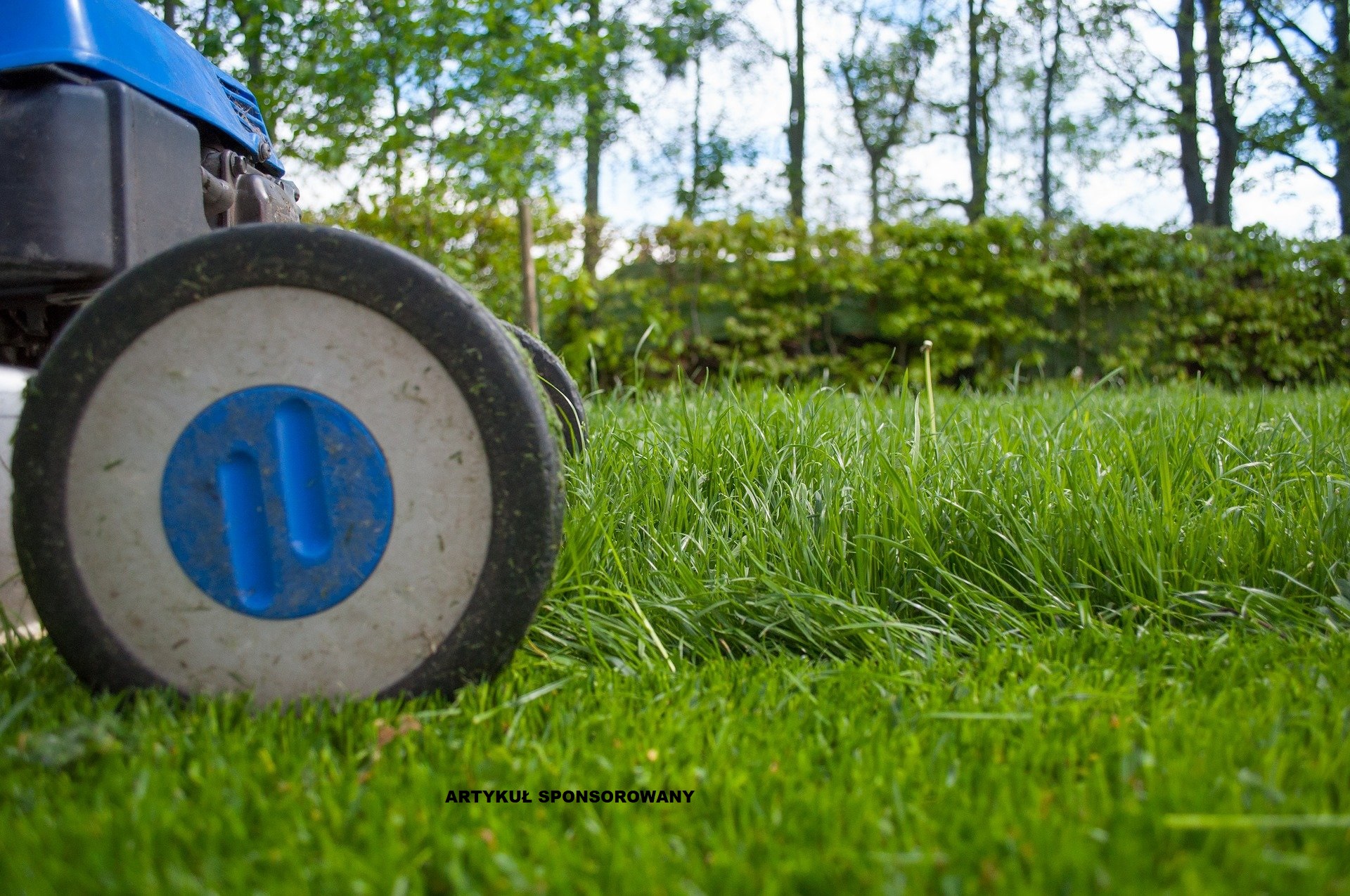
Spring lawn care aims to remove excess thatch and provide necessary nutrients. If done properly, it will ensure that the lawn grows quickly and turns beautifully green by late April and early May. What treatments are worth carrying out to restore our lawn to its appearance from the previous season? You will find out by reading today’s article.
Scarification: the essential regenerating treatment
Scarification aims to slice through the turf and remove dead remnants from the previous year. Excess thatch is the main reason for a lawn's poor appearance. It makes it harder for water to penetrate, and the application of mineral fertilisers does not yield the expected results. Scarification should be carried out just after the start of the growing season. The appropriate time is usually mid-April, but a lot depends on the current weather conditions. If winter ends quickly and high temperatures prevail in March, the lawn will begin to grow very quickly, and scarification can even be performed at the end of March.
To perform this treatment, it is necessary to have a scarifier. It’s best to equip yourself with an electric or petrol device, as manual scarifiers are not very effective and require considerable effort. Using a petrol device, you can adjust the depth of the turf slicing, which should be tailored to the condition of the lawn and the amount of thatch lying on the ground. The more thatch there is, the deeper the scarification should be done. Remember to perform this treatment when the soil is dry; otherwise, you will not achieve the desired effects and your efforts will be in vain.
Without proper fertilisation, the lawn won’t green up quickly
There is no beautiful lawn without the right amount of mineral fertilisers. Of course, you can also fertilise the lawn with natural products, but their use will be significantly more expensive and less effective. A good spring fertiliser for lawns should contain a large amount of nitrogen. Many people start with only nitrogen preparations, but it seems that much better results can be achieved if we decide to give the grass a multi-component product from the start. Thanks to it, the grass will green up quickly, and we will take care not only of the above-ground part of the lawn but also the roots.
The fertiliser should be spread evenly over the lawn’s surface, ensuring that no place accumulates a larger pile, which could burn the lawn. It is advisable to carry out this treatment before rain, and if forecasts do not predict precipitation in the near future, we should thoroughly water the lawn immediately after fertilisation. Multi-component products dissolve quite slowly, so it is worth not skimping on water. Remember not to use a too intense stream, as it may move the fertiliser to another location and cause a large amount to dissolve in a relatively small area. This will result in lush growth in that part of the lawn, which will not look very aesthetically pleasing.
Don’t forget about proper irrigation
Spring is the time when it frequently rains, but in recent years there have been very dry periods in April and May, so in such cases, it is important to ensure proper irrigation of the lawn. Scarification and fertilisation alone are not enough, as the lawn also needs water for fast growth. Without it, it will not be able to grow quickly and green up in May.
For watering, it is worth using automatic irrigation systems, which will provide the grass with the right amount of water and save us a lot of time. The installation itself is not overly complicated, so it can be done even by yourself.
Author
This publication was created in collaboration with the gardening portal Ogarnij Ogród. One of the largest gardening portals in Poland.