
Territorial marketing objectives
Before considering the recipients of marketing activities, it is essential to define objectives tailored to a specific group. The message conveyed in a campaign aimed at prospective students at a particular academic institution will differ from that directed at tourists. In addition to the primary objective, which, as previously mentioned, is to capture attention and subsequently attract the audience, there are secondary goals that usually correspond to the needs of individual and current campaigns. Thus, it can be stated that based on the actions and objectives of territorial marketing, groups of recipients can be identified.
In principle, the objectives of marketing activities can be categorized into those that directly aim to yield an economic dimension and those that are expected to provide financial benefits indirectly— in the future. The first group includes all activities directed towards businesses and potential investors— for example, the creation and promotion of a special economic zone. The second group can include campaigns targeted at prospective students, tourists, and those aimed at improving the image of a place.
Generally, the objectives of marketing activities can be as follows:
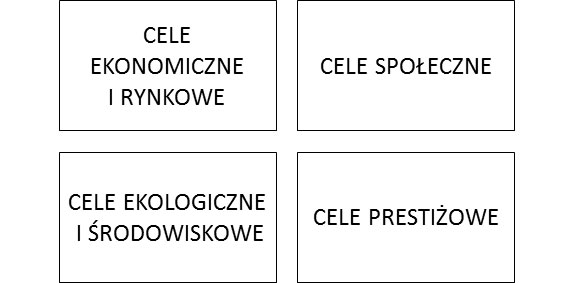
- economic and market objectives – define the scale of economic and financial benefits that marketing activities are expected to produce, which may be expressed in terms of increased sales, enhanced tax revenues, greater turnover, and expansion of the market in a given territory, etc. In the simplest terms— in monetary value— they allow us to specify objectives and subsequently verify the degree of their accomplishment. This objective largely drives the level of competition among regions— for instance, in attracting new investors or funds and grants. This objective assumes an increase in the standard of living and wealth of the residents of a given territory.
- social objectives – define the increase in satisfaction and contentment of residents with the overall development of the locality; this can also include social and income security, as well as opportunities for personal development. These objectives are often the subject of rankings for localities (for example, respondents answer the question— in which of the Polish cities are the greatest opportunities for development or which city is considered the safest to live in Poland). This objective directly shapes the image of the region and the perception of its attractiveness in the eyes of residents of other regions.
- ecological and environmental objectives – can be defined by the reduction of overall environmental pollution in a given territory, as well as the level of growth in the revitalization of the natural environment (for example, planting new forest areas, creating trails and paths with ecological value, etc.), and a decrease in the level of natural resource consumption. These objectives also improve the overall attractiveness of the region and align with the latest trends in management— corporate social responsibility.
- prestige objectives – understood as the overall image of a place or locality— the intended aim of improving the image can be particularly long-lasting and difficult to measure.
Improving the image significantly increases the attractiveness of a place and a region. It consistently and sustainably enhances the value of a specific territory (for example, this is indicated by a rise in property prices, the average salary level, or GDP per capita).