

Pęksowy Brzyzek Cemetery in Zakopane
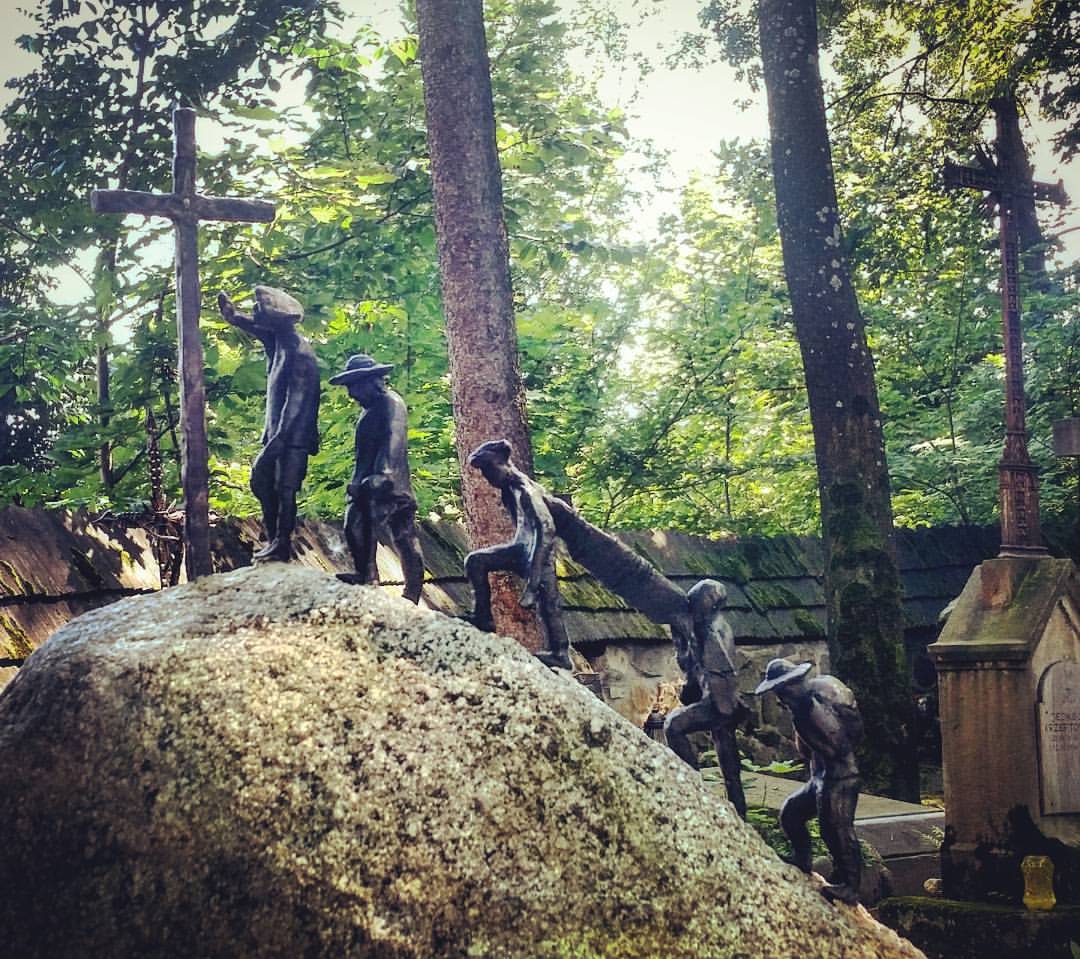
The Cemetery at Pęksowy Brzyzek is one of the atmospheric places on the map of Zakopane. Located near the lower Krupówki, right next to the Old Church on Kościeliska Street, it is one of the most famous Polish cemeteries that attracts many tourists. But what is the reason for the popularity of this small cemetery?
It is worth going back to the beginning of its history. The cemetery was established in 1851 by the parish priest of Zakopane – Father Józef Stolarczyk. The land for the cemetery was donated by Jan Pęksa. Hence, the name, with the latter part "brzyzek" in the local dialect meaning a cliff by a stream. Initially, it was only used to bury victims of accidents in the Tatra Mountains, tuberculosis, highlanders, and residents of Zakopane. Since 1931, the cemetery has been listed as a historic site and designated as the Cemetery of the Meritorious, meaning that each burial required the conservator's consent. From that moment on, only distinguished individuals and those deserving for Podhale were buried at Pęksowy Brzyzek.
Meritorious Individuals
The first known person to be laid to rest at Pęksowy Brzyzek was Tytus Chałubiński. He was the one in whose honour the Chałubiński Gates in the main ridge of the Tatras were named, and he was a great promoter of Zakopane. Next to him is buried the honorary Tatra guide, storyteller, and singer – Jan Krzeptowski (Sabała). At the entrance, on the right side, lies the grave of Stanisław Witkiewicz, the most distinguished painter, writer, and architect. As we delve deeper into the cemetery, we will find the graves of: writer Kornel Makuszyński, poet Kazimierz Przerwa-Tetmajer, mountain climber and Tatra guide Witold Paryski. We will also find a symbolic gravestone for the Himalayan climber Maciej Berbeka.
The Atmosphere of the Place
There are about 500 graves at Pęksowy Brzyzek, each of which can be called a work of art. The gravestones are often chapels, crosses with Podhale motifs, and sculptures made of metal or wood. One of the creators of many of them is Władysław Hasior, who is also buried in this cemetery. On the grave of Jan Długosz, one of the most famous climbers and alpinists in Poland, there hangs climbing gear. The monument itself is also unusual – a stone weighing over three tons, sourced from Morskie Oko, where Jan Długosz often rested after climbing. On the grave of Kornel Makuszyński, young readers leave their beloved toys. The cemetery is surrounded by a stone wall, and the entrance gate was designed by Stanisław Witkiewicz himself. Since 2014, a small fee has been charged at the entrance for visitors, which goes towards the conservation of the site (3 PLN for adults and 1.50 PLN for children).
Photo and text author: Ewa Bandyk