

Jelenia Góra
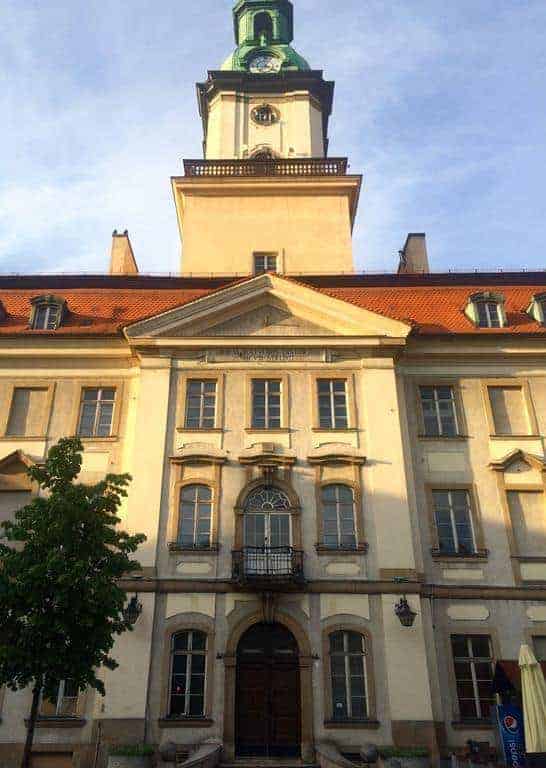
Legend has it that one of the residents of Jelenia Góra took part in the Battle of Grunwald. When he returned home after the victorious skirmish, he got lost in the forest. A magnificent stag showed him the way. The knight not only followed it but also took care of it, and in its honour, he named his hometown Jelenia Góra. But what really happened?
The city's origins reach back to times slightly more distant than the victory at Grunwald. An early medieval defensive settlement existed there as early as the beginning of the 12th century. The following centuries only contributed to its development. Over time, the city, surrounded by the Bóbr, Kamienna, and Wrzosówka rivers, became a thriving centre of weaving and later a holiday resort. Today, one can admire the architectural testimonies of the history of Jelenia Góra. These include the remains of defensive walls with towers, preserved in the city centre. One of the towers, the Castle Tower, located on Powale Street, serves as a viewpoint.
Besides the history carved in stone, the attention of tourists is drawn by the over a hundred-year-old Karkonosze Museum, which presents the history and culture of the region. It can be visited every day except Monday; free admission is granted on Wednesdays. On other days, from 09:00 to 17:00, visitors can enter after purchasing a ticket, which costs 10 PLN (normal) or 5 PLN (concession).
Jelenia Góra attracts not only history enthusiasts. Every year, it also draws theatre and music lovers. The former often "invade" Jelenia Góra in July as part of the International Street Theatre Festival. Music lovers arrive after the summer holidays to attend organ concerts as part of the Silesia Sonans Festival.
As you can see, regardless of the season, the city has a lot to offer tourists. All you need to do is come. The stag will show you the way ;)
Photo and text author - Bogusława Bandyk