

The Poprad Valley for a few days — Stary Sącz, Piwniczna, Muszyna and Krynica-Zdrój on one route
The Poprad Valley – which places are worth seeing?
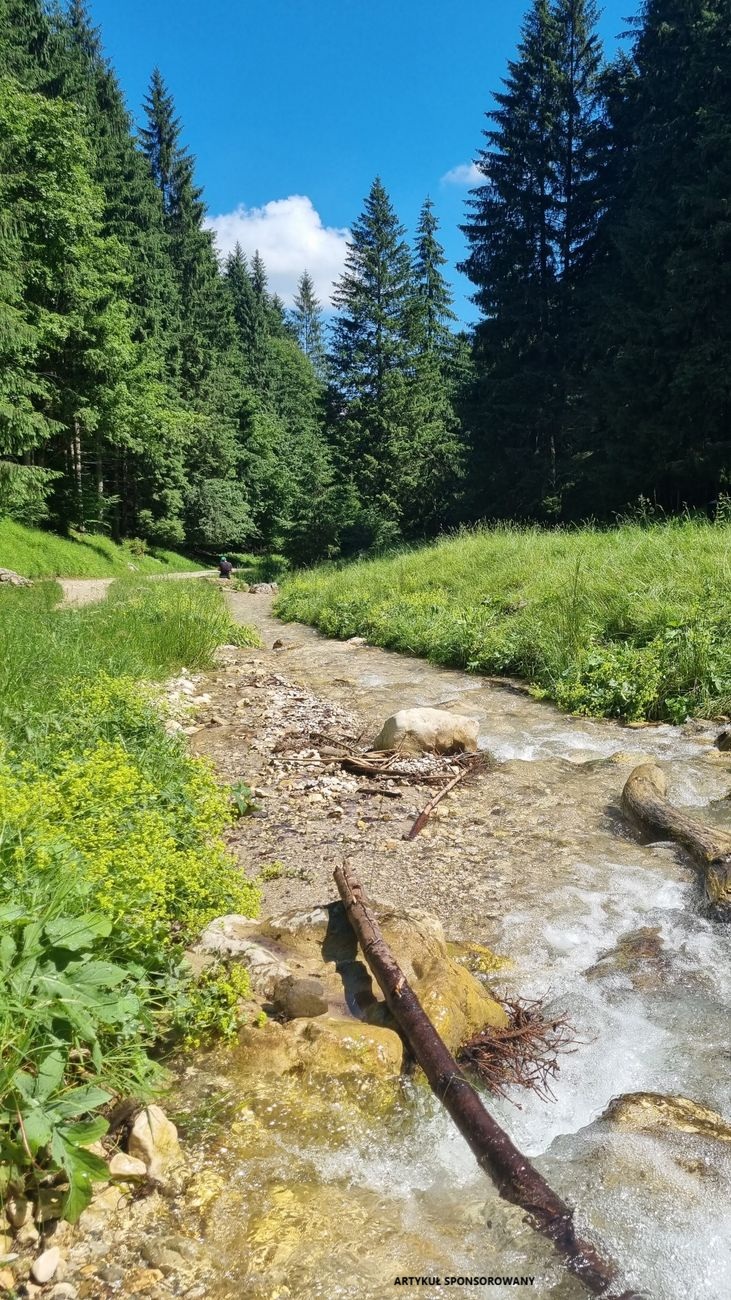
The Poprad Valley is one of the most beautiful scenic routes in Lesser Poland, yet it is still mainly driven „on the way” — from the motorway to Krynica. Meanwhile, the section between Stary Sącz and Krynica-Zdrój stands on its own as an idea for a trip lasting several days: the river flows along the Polish-Slovak border here, the road and railway tracks cross it a dozen or so times, and wooded ridges of the Sącz Beskids stretch along both sides. On top of that, there are three spa towns with mineral waters along a single road. Below is a north-to-south route plan.
Stary Sącz — the gateway to the valley
It is best to start the route in Stary Sącz, one of the oldest towns in Lesser Poland. The cobbled market square, surrounded by one-storey townhouses, looks as if time stopped here a hundred years ago, while the town is dominated by the Poor Clares’ convent founded by Saint Kinga in the 13th century. It is also worth visiting the meadows by the Poprad, where a papal altar from 1999 stands. An hour or two of walking is enough to get a feel for the place before the road turns south, deeper into the valley.
Piwniczna-Zdrój — the least crowded spa town in the valley
A dozen or so kilometres farther on lies Piwniczna-Zdrój — the most modest of the Poprad’s spa towns and, precisely for that reason, worth stopping at. There is a mineral-water pump room, a pedestrian and cycle footbridge over the river, and a market square with an urban layout dating back to the times of Casimir the Great. In summer, there is a bathing area on the Poprad, while walking routes to Kicarz and the Radziejowa range are available all year round. Piwniczna is also a good place for lunch halfway along the route.
Muszyna — gardens and castle ruins
The third stop is Muszyna, which has invested heavily in attractions in recent years: the sensory gardens and biblical gardens on the hillside above the town are among the most interesting places of their kind in Poland, while the castle ruins on the hill offer a view of the confluence of the Poprad and Muszynka. Nearby, there are Lemko Orthodox churches integrated into the valley landscape, including the one in Powroźnik (UNESCO), as well as a dozen or so mineral-water springs scattered along the road.
Krynica-Zdrój — the finale of the route
The route ends in Krynica-Zdrój, the largest spa town in the Sącz Beskids. The promenade with its main pump room is a must — in Krynica, you can drink Zuber, the most highly mineralised medicinal water in Poland, as well as the milder Słotwinka, named after the stream flowing through the northern part of the town. On the other side of the promenade are the Nikifor Museum and the Spa Park with a graduation tower — fifteen minutes breathing in the saline mist does you good after a day behind the wheel. Finally, the gondola lift takes you to Jaworzyna Krynicka (1,114 m above sea level) in a dozen or so minutes; in good weather, you can see the Tatra Mountains from there, while the descent leads through beech forests that turn russet-gold in September and October. Families with children can also make use of the year-round toboggan run and Góra Parkowa with its funicular railway.
Accommodation: one base instead of repacking suitcases
The entire route can be covered in one day, but then all you see of it is through the car window. It makes more sense to spread it over three or four days with one accommodation base — and Krynica is the best option, as every point in the valley is no more than an hour’s drive away. For a few days, an apartment with a kitchenette can be more convenient than a hotel room — especially for a family or a couple who, after a day of sightseeing, would rather return to their own space than to a hotel lobby. In the Słotwiny valley, on the quieter side of Krynica, there is an apartment complex with a wellness area — a sauna and jacuzzi, as well as a heated outdoor pool in summer; if you are planning a stay at the turn of summer and autumn, check the available dates in advance, as September weekends can fill up faster than weekdays. From there, it takes just a few minutes to reach the promenade by car, while the lower station of the Słotwiny Arena ski lift is a fifteen-minute walk away.
When to go
The best window is September and the first half of October: holiday traffic subsides, the gondola to Jaworzyna runs without queues, and the forests above the Poprad display their deepest colours of the year. Accommodation prices are then lower than during the peak season, the days are still long enough for full-day sightseeing, and the evenings are crisp enough that a sauna after returning stops being an indulgence and becomes the evening’s plan.