

Lublin
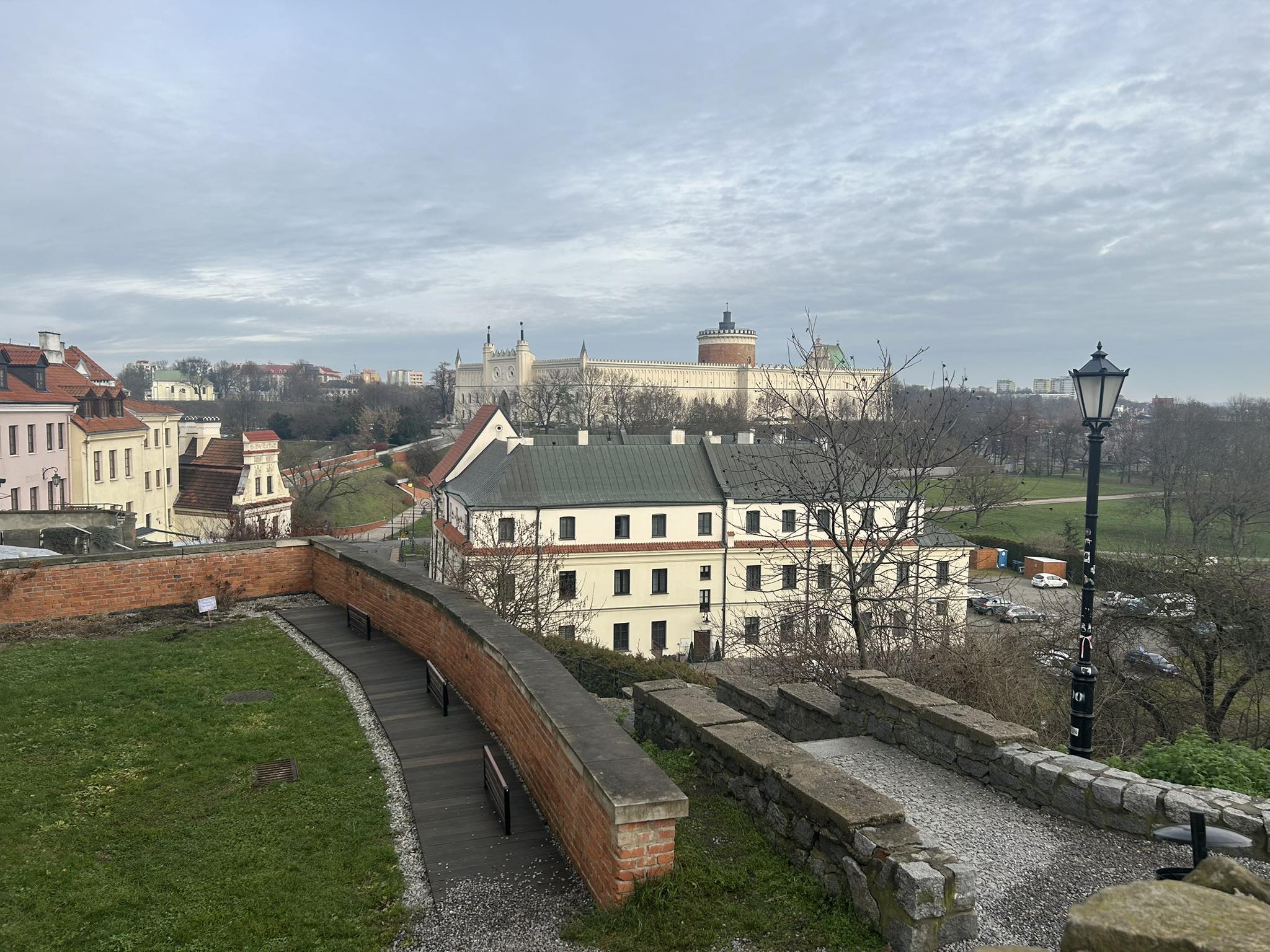
Lublin – a city of inspiration, history and cultural encounters
There are cities that captivate at first glance with their monumental monuments. There are also those whose true beauty is revealed only during a quiet walk through cobblestone streets, conversations with locals, and taking a moment to rest in the shade of historic tenements. Lublin undoubtedly belongs to the latter category.
Situated at the crossroads of cultures, religions, and traditions, it has served for centuries as a meeting place for people from various corners of Europe. Here, trade routes crossed from east to west and from north to south. For centuries, merchants, craftsmen, scholars, artists, and pilgrims met, leaving traces visible today in architecture, culture, and the city's unique atmosphere.
Lublin is not the largest city in Poland nor the most famous metropolis. It does not try to compete with Krakow's royal splendor or Warsaw's modern investment scale. Its strength lies in its authenticity. It is a city that does not pretend to be anything else – it delights with its history, tranquility, and extraordinary ability to connect the past with the present.
A walk through the Old Town transports you back to the medieval times when merchant life was bustling outside the city walls. A few minutes later, you can find yourself in a modern academic center full of students, cafes, and cultural events. This diversity makes Lublin an attractive destination for both history lovers and those looking for an interesting weekend getaway.
Why is it worth visiting Lublin?
Just a dozen years ago, many people viewed Lublin as a "stopover" city – a point on the map leading to Roztocze, Zamość, or Podlasie. Today, it increasingly stands as the main destination for travellers. This is no coincidence. In recent years, Lublin has undergone an impressive transformation. Renovated tenements, revitalized squares, new cultural spaces, and a rich event offer have made the city regularly appear in rankings of the most interesting places to visit for a weekend in Poland.
Here, you can explore a medieval castle, see priceless Byzantine-Ruthenian paintings, pass through one of the best-preserved historical city gates, visit atmospheric cafes, and in the evening, attend an outdoor performance or a light festival, all within a single day. Lublin is also one of the most important academic centers in the country. Tens of thousands of students give it a youthful character, making the historic streets vibrant all year round. It is this combination of centuries-old history with the energy of young people that creates an atmosphere hard to find in other Polish cities.
A city of many cultures
One of Lublin's greatest treasures is its multicultural heritage. For centuries, Poles, Jews, Ruthenians, Armenians, Germans, Greeks, and representatives of many other nationalities lived side by side. Each of these communities left a lasting mark. It is thanks to this that Catholic churches, Orthodox churches, Protestant congregations, and synagogues emerged in close proximity. The city has become a place of religious and cultural dialogue, which has been crucial for the development of the entire region.
Before World War II, the Jewish community accounted for nearly one-third of Lublin's population. The Jewish quarter was one of the most important centers of religious and intellectual life in this part of Europe. Here, famous Talmudic schools, printing houses, and outstanding scholars were active.
Although the war irrevocably changed the face of the city, the memory of its former residents still lingers. Strolling through the streets of Lublin, one can find numerous places that remind of the rich history of the Jewish community and the multicultural character of the city.
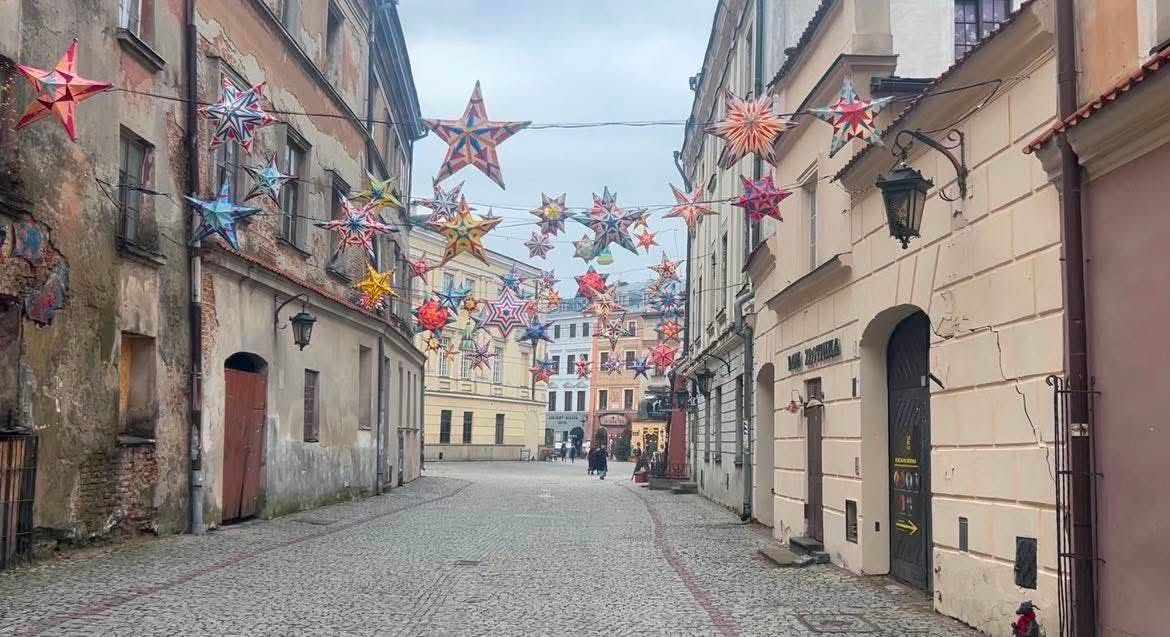
Lublin – a gateway between East and West
Its geographical location has always been one of the city's greatest assets. Lublin developed at the intersection of important trade routes leading from Kraków to Vilnius, from Mazovia to Ruthenia, and further towards the Black Sea. Merchants transported salt, furs, grain, wax, cloth, spices, and many other goods.
Trade brought wealth, and along with it, craftsmanship, architecture, and culture flourished. The city quickly became one of the most important economic centers of the former Commonwealth. The fairs held here were among the largest in Central and Eastern Europe, attracting merchants from faraway lands. This established Lublin's reputation as an open, tolerant, and welcoming city for newcomers. This tradition of hospitality has survived to this day and distinguishes the city among other Polish centers.
A TRIP TO LUBLIN OR DISCOVERING LUBLIN REGION? - ORDER FROM US -
The Beginnings of Lublin – from a settlement to a city
The history of Lublin dates back much further than one might think. Archaeologists confirm the presence of settlement in this area as early as the early Middle Ages. The location on loess hills surrounded by river valleys of Bystrzyca, Czechówka, and Czerniejówka favored this. The natural terrain provided safety and favorable conditions for the development of a settlement. The first defensive stronghold probably emerged in the 11th century on the castle hill. Wooden and earthen fortifications protected the residents from invasions, and over time, new crafts and trade settlements began to develop around the stronghold.
The first written mentions of Lublin date back to the 12th century. Chronicles referred to it as an important administrative and military point on the eastern borders of the Piast state. The city's development accelerated especially after it was granted city rights according to Magdeburg law in 1317 by King Władysław Łokietek. This was a groundbreaking event that marked the beginning of intensive economic and urban development. New privileges allowed for the organization of fairs, the development of crafts, and the creation of merchant guilds. In a short time, Lublin became one of the most important cities in the Kingdom of Poland.
Casimir the Great and the Birth of the City's Power
King Casimir III the Great had a tremendous influence on the development of Lublin. It was during his reign that the first brick city fortifications were built, the royal castle was expanded, and the construction of public buildings commenced. The city gained significantly greater strategic significance. It became an important point on the road leading from Krakow to Halicz and to the Grand Duchy of Lithuania. The developing trade attracted new residents, merchants, and craftsmen. New tenements, warehouses, workshops, and temples were built. Gradually, the urban layout of the Old Town began to take shape, which – despite numerous reconstructions – has survived to our times. By the 14th century, Lublin belonged to the most important trade centers in this part of Europe. In the following centuries, its significance was to increase even further, leading to an event that would be forever etched not only in the history of the city but also of Poland and Lithuania.
The Golden Age of Lublin and the Union of Lublin – the time when the city became the heart of Central-Eastern Europe
Lublin in the Era of Greatest Glory
In the history of many cities, there comes a moment of exceptional flourishing – a time when favorable political, economic, and cultural circumstances give a place unique significance. For Lublin, that period was the 16th century, often referred to as the city’s golden age.
It was during this time that Lublin experienced one of the most crucial stages in its history. The city evolved from a local trading center into one of the most important points on the map of the Polish-Lithuanian Commonwealth. The development of trade, political significance, artistic activity, and the presence of representatives from numerous nations made Lublin an exceptional place – open, diverse, and full of energy.
Today's stroll through the Old Town allows one to see traces of that era. Renaissance tenements, the layout of the streets, historic temples, and former commercial spaces remind one of a time when merchants from all over Europe passed through Lublin, and decisions were made within the city walls that affected the fates of the entire continent.
The Merchant Power of Lublin
One of the most important factors in the city's development was trade.
Lublin's location made it a natural meeting point of various communication routes. The city was situated between the western and eastern parts of Europe, between the Crown of the Kingdom of Poland and the lands of the Grand Duchy of Lithuania.
The fairs organized in Lublin were particularly significant. They attracted merchants from far-flung regions – Poland, Lithuania, Ruthenia, Hungary, Silesia, and even from Western Europe.
At the municipal markets, the following were traded:
- grain,
- skins,
- fur,
- wine,
- salt,
- spices,
- fabrics,
- metals,
- craft products.
Merchants visiting Lublin did not only conduct transactions. They also brought information, ideas, languages, and customs. Because of this, the city became a place of exchange not only economically but also culturally.
In the 16th century, Lublin was one of those places where one could meet people of many nationalities and faiths. This diversity became one of the most important elements of the city's identity.
The Lublin Renaissance – a Unique Architectural Style
The period of Lublin's greatest glory left behind an incredibly valuable architectural heritage.
The 16th century was a time of the Renaissance – an era that brought a revival of interest in ancient art, harmony, proportion, and the beauty of human creation.
In Lublin, a unique variant of this style emerged, known as Lublin Renaissance.
It was characterized by a combination of influences from the Italian Renaissance with local building traditions. This was particularly evident in the tenements of the Old Town, which received elaborately decorated facades, decorative attics, and characteristic architectural details.
Some of the most beautiful examples of this style are the tenements located at the Old Town Market.
It is worth paying attention to:
- decorative facades,
- Renaissance portals,
- decorated gables of buildings,
- sculptural details.
Thanks to them, Lublin has preserved an extraordinary atmosphere of a Renaissance city to this day.
The Union of Lublin – an event that changed the history of Europe
In the history of Lublin, there is no event more important than the Union of Lublin in 1569. It was here, at the Lublin Castle, that the act was signed, uniting the Kingdom of Poland and the Grand Duchy of Lithuania into a single state organism – the Commonwealth of Both Nations. This was an event of huge political significance. One of the largest states in Europe was created, encompassing vast areas of Central and Eastern Europe.
The negotiation process was not simple. Representatives of both sides had different interests and visions for the future organization of the state. The talks lasted many months and required compromises. The choice of Lublin as the meeting place was not accidental. The city was located almost ideally between the main centers of the Crown and Lithuania. It was a well-known trading center, had adequate administrative support, and had long served as a meeting place.
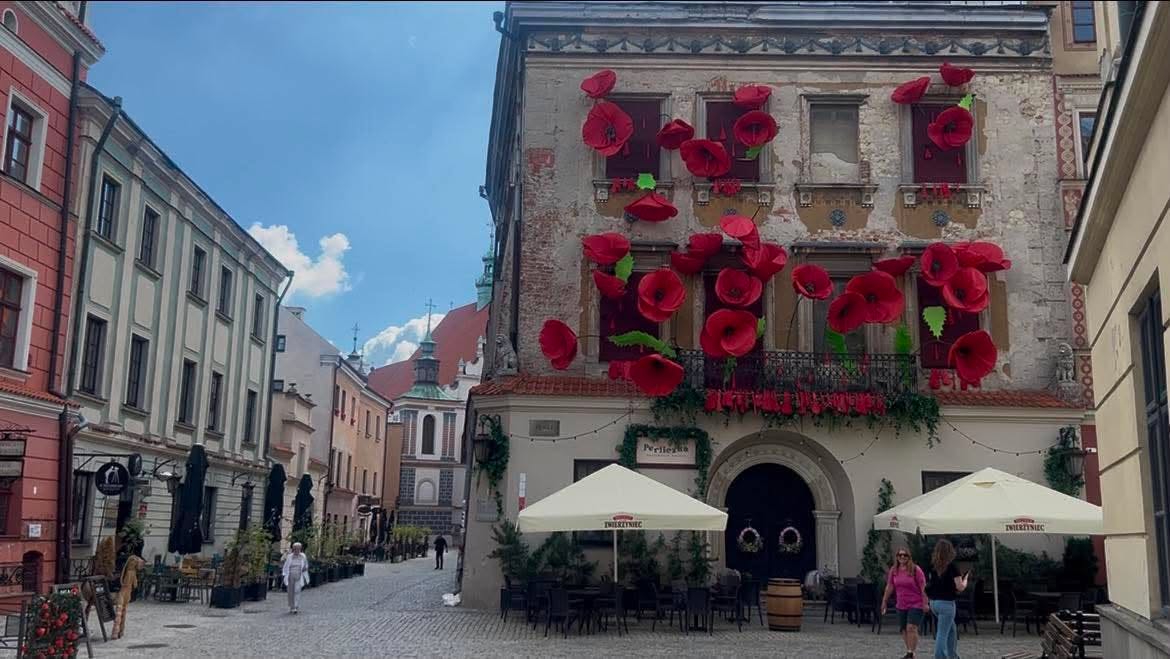
Lublin of many nations
Imagine standing in the Old Town Market not today, but four hundred years ago. From the open windows of townhouses, you hear the voices of merchants conversing in several languages at once. The stalls are filled with the scent of pepper brought from the far south, next to towering bales of cloth brought from Western Europe, and a few steps away, a trader from Ruthenia boasts about furs that just weeks ago were hundreds of kilometers east of Lublin.
On the streets, nobles, townsfolk, and clergy of various faiths cross paths, along with travelers heading to Vilnius, Kraków, or Lviv. For some, Lublin is a stop on a long journey; for others, it is a place where they begin anew. Few cities of the former Commonwealth could so naturally connect people representing different cultures, religions, and traditions.
This diversity is what made Lublin more than just an important trade center for centuries. It was a meeting place of worlds where Poles, Jews, Ruthenians, Armenians, Germans, and many others created daily life together. Their presence has left visible traces to this day – not only in monuments but also in the character of a city that has learned openness and dialogue for centuries.
Even before the outbreak of World War II, the Jewish community made up nearly one-third of Lublin's residents. The Jewish quarter was one of the most important centers of religious and intellectual life in this part of Europe, and the Yeshiva Chachmej Lublin attracted students from many countries. The city had printing houses, schools, artisan workshops, and markets, creating a cultural mosaic that cannot be understood without knowing the history of its former inhabitants.
Although the war brutally interrupted this centuries-long development, the memory of it has not disappeared. Today, while walking through Lublin, one can find places that remind of the world that existed for hundreds of years and show the immense impact it had on the city's identity.
The Image of the Union of Lublin – a Unique Memento of History
One of the most important monuments related to the history of Lublin is the Chapel of the Holy Trinity located in the Lublin Castle. This extraordinary place combines two great cultural currents of medieval Europe. The interior of the chapel is adorned with priceless Rus-Bizantine frescoes funded by King Władysław Jagiełło. They are among the most valuable monuments of this type in Poland. The chapel is also a symbolic meeting place of cultures – precisely like Lublin itself has been for centuries. Here, one can best understand the unique character of the city: western architecture meets eastern artistic tradition.
Lublin as a Royal City
During its greatest development, Lublin often hosted monarchs.
Among those who spent time here were:
- Casimir the Great,
- Władysław Jagiełło,
- Casimir Jagiellończyk,
- Sigismund I,
- Sigismund II Augustus,
- Stephen Báthory.
Royal visits emphasized the city's significance and influenced its development. The Lublin Castle served not only a defensive function but also a representative one. It was a meeting place for political elites, royal courts, and important ceremonies. Because of this, Lublin found itself at the center of national events for many years.
Daily Life in Renaissance Lublin
Behind the grand political events was the ordinary life of the residents.
In the 16th century, Lublin was a bustling city.
On the streets, you could encounter:
- merchants conducting business,
- craftsmen working in workshops,
- students studying,
- clergy,
- travelers,
- artists.
Craft guilds operated, printing developed, and new buildings were erected. Townspeople played a crucial role as commerce and crafts gained increasing importance. Lublin was not merely a center of royal administration. It was a lively, dynamic city where various communities met.
The Legacy of Lublin's Golden Age Today
Strolling through contemporary Lublin, you can still find traces of the period of the city’s greatest prosperity.
It's worth noting:
- the Old Town Market,
- Renaissance tenements,
- Lublin Castle,
- the Chapel of the Holy Trinity,
- Kraków Gate,
- the historic layout of the streets.
Thanks to preserved monuments, Lublin is one of the best places in Poland for those interested in history and architecture. The city is not a museum exhibit. Its ancient history coexists here with the daily lives of its residents.
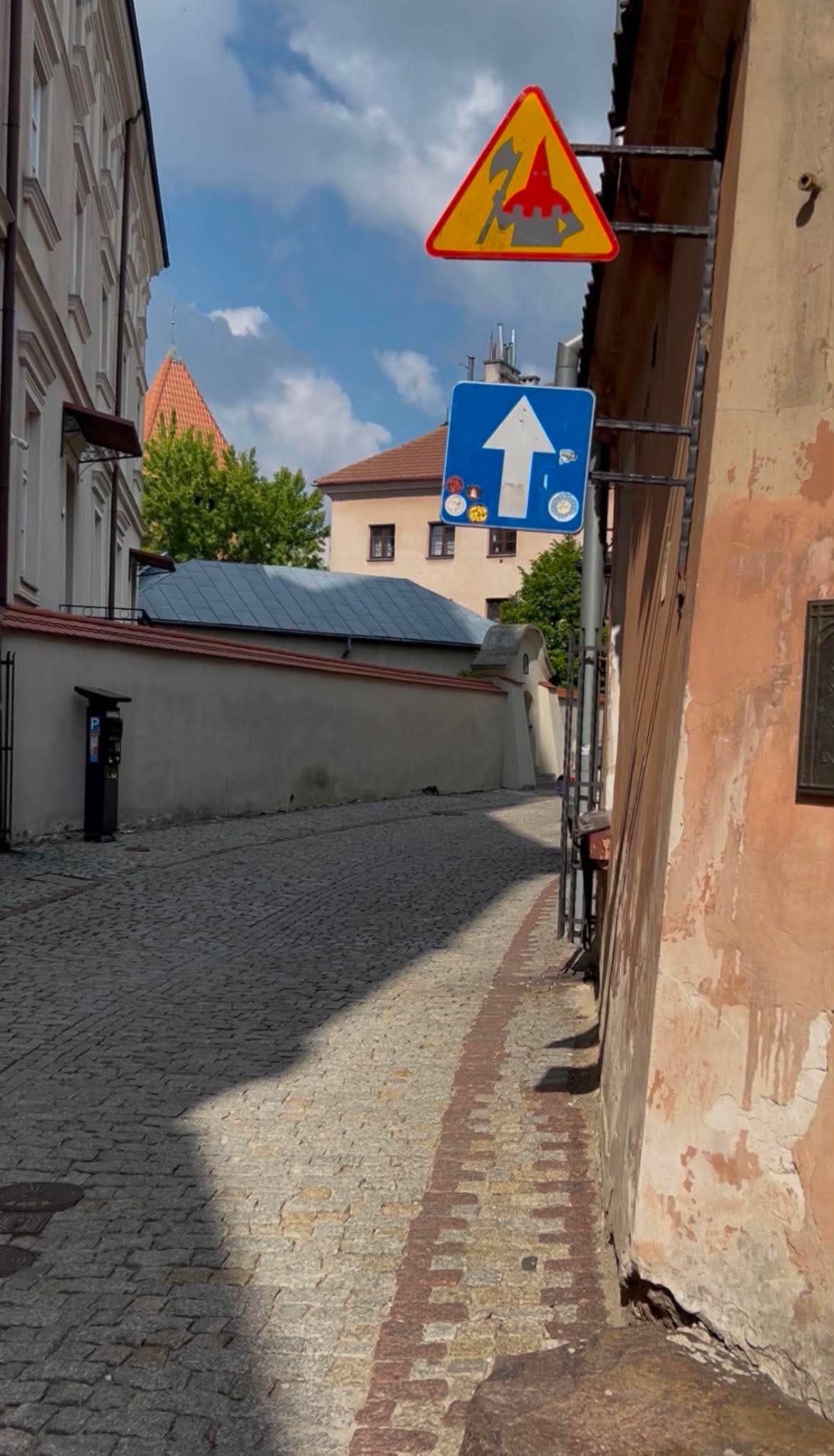
From the Partitions to the Present – a City that Could Rebirth After Every Storm
The history of Lublin does not end with the golden age and the signing of the Union of Lublin. On the contrary – the following centuries brought events that put the city through some of the toughest trials in its history. Wars, fires, epidemics, partitions, and occupation meant Lublin had to start anew on numerous occasions. Nevertheless, it never lost its identity.
It was the resilience of the residents, the ability to rebuild, and openness to change that made contemporary Lublin a city that looks proudly to the future without forgetting its past.
The 17th Century – The Beginning of Harder Times
After a period of remarkable flourishing, the years full of challenges arrived. In the 17th century, the Commonwealth found itself at the center of many armed conflicts. Wars with Sweden, Russia, the Cossacks, and Turkey also impacted Lublin. The city, which had recently flourished with trade, began to feel the effects of the economic crisis.
To the problems of war were added epidemics and fires. They repeatedly devastated the city's buildings, causing immense material losses and decreasing the population. Although Lublin remained an important administrative center, its trade significance gradually diminished.
Partitions of Poland and a New Reality
The end of the 18th century brought an event that changed the fate of the entire country. After the third partition of Poland, Lublin fell under the rule of the partitioners. For the inhabitants, this meant having to function in completely new political and administrative realities. Despite the loss of independence, the city continued to develop.
New schools, offices, and artisan workshops emerged. Infrastructure was developed, and Lublin gradually became one of the most important centers in the eastern part of the Polish lands. It was during this time that new streets were laid out, communication developed, and modern neighborhoods began to be planned beyond the historical center.
The 19th Century – The Birth of a Modern City
The 19th century was a time of great transformations for Lublin. The railway arrived, industry developed, factories were built, new tenements emerged, parks were created, and education flourished. The city began to extend beyond its medieval walls. Former suburbs gradually transformed into new districts. Numerous buildings constructed during this time now form a characteristic element of Lublin’s landscape. Strolling through Krakowskie Przedmieście or Aleje Racławickie, one can see many examples of architecture from the turn of the 19th and 20th centuries.
The State Museum at Majdanek – a place that cannot be left indifferent
Among all the places associated with the history of Lublin, one holds a special place. The State Museum at Majdanek is not a tourist attraction in the traditional sense of the word. It is a space for memory, reflection, and contemplation, reminding us of one of the most tragic chapters in the history of the 20th century.
The former German Nazi concentration and extermination camp, established on the outskirts of Lublin in 1941, was one of the largest of its kind on the occupied Polish territories. Here, prisoners of many nationalities – Poles, Jews, Belarusians, Ukrainians, Russians, and representatives of other European nations – were sent. For thousands of people, Majdanek became a place of unimaginable suffering, forced labor, and death.
Today, the former camp area has been preserved as an authentic testimony to history. The preserved barracks, watchtowers, crematorium, gas chambers, and the monumental Monument to Struggle and Martyrdom create a space that should not be rushed through. Each step encourages reflection on the fate of the people who found themselves there against their will.
A visit to Majdanek is a deeply moving experience. It leaves no room for superficial emotions or quick sightseeing. It is one of those places that teach humility before history and remind us how great a value freedom, human dignity, and mutual respect are. Although being here can be difficult, many visitors emphasize that only after leaving can one fully comprehend the dramatic fate of Lublin and its residents during World War II.
That’s why it’s worth reserving enough time for Majdanek when planning your visit to the city. This place does not require haste – it requires attentiveness.
July 1944 – The Beginning of a New Chapter in the City’s History
In the summer of 1944, Lublin became the first large Polish city liberated from German occupation. This event opened a brand new chapter in both the history of the city and the entire country.
It was here that the Polish Committee of National Liberation began its operations, and for a brief period, Lublin served as the political center of the re-emerging state. It was a time full of hope, but also uncertainty. The war had left immense destruction, thousands of families mourned their loved ones, and the multicultural character of the city had irrevocably changed.
However, a process of rebuilding began, gradually restoring Lublin's former energy. In the ruins and ashes, a new reality was born, and residents undertook the effort to rebuild their city with remarkable determination.
Reconstruction that Created Modern Lublin
The post-war development of Lublin was one of the most important periods in its modern history. Destroyed tenements and streets were rebuilt, new housing estates were created, industrial plants developed, and the city gradually strengthened its position as the most important administrative, economic, and scientific center in eastern Poland.
Particular attention was given to education. Existing universities were expanded, and new educational institutions were established, thanks to which Lublin gained a reputation as one of the most important academic centers in the country. It was during this period that the character of the city was formed, which remains its trademark to this day – a blend of rich history with youth, science, and culture.
As you stroll through the modern districts of Lublin, it is difficult to perceive the scale of destruction left by the war. This is the best evidence of the enormous work done by successive generations of residents who managed to rebuild not only buildings but also the social and cultural life of the city.
A City of Students that Continues to Evolve
Today, Lublin is primarily associated with youth. Every year, tens of thousands of students from all over Poland and abroad come here to study at renowned universities. Thanks to them, the historic city center gains a unique energy that is difficult to find in many other Polish centers.
The presence of the academic community influences not only scientific life but also culture, gastronomy, and social events. Throughout the year, numerous festivals, concerts, conferences, and literary meetings take place, and cafes and restaurants buzz with life at almost any time of day.
This harmonious combination of centuries-old heritage with openness to new ideas makes Lublin an incredibly dynamic city. History does not constitute a closed chapter here – it becomes an inspiration for subsequent generations.
Culture as the City’s Calling Card
In the last two decades, Lublin has undergone an impressive metamorphosis. Meticulously restored Old Town, revitalized squares and streets, and the development of modern cultural institutions have made the city one of the most essential centers of artistic life in Poland.
Today, the event calendar is filled with festivals of international renown almost year-round. The Carnival of the Sorcerers turns the streets into a stage for circus artists from all over the world, the Night of Culture allows one to discover the city in a completely new light, the Jagiellonian Fair recalls ancient craft traditions, and the East of Culture – Other Sounds festival presents music and art that transcend the mainstream.
Thanks to such events, Lublin has become a place that attracts visitors not only for its monuments but also for its atmosphere and rich cultural offerings.
European Capital of Youth
A symbolic confirmation of this transformation was Lublin being awarded the title of European Capital of Youth 2023. This distinction was not merely a prestigious title but a result of years of efforts to activate young people, support social initiatives, and build a city open to dialogue and cooperation.
It is thanks to such actions that Lublin is increasingly perceived as a modern European city that respects its own history while bravely looking to the future.
Modern Lublin – A City You Want to Return To
However, the greatest strength of contemporary Lublin lies not only in its monuments or its rich offering of events. The exceptional nature of the city is primarily determined by its atmosphere.
Few Polish cities can so naturally combine medieval streets with the modern rhythm of life. In a single day, one can stroll through cobbled alleys dating back to the Jagiellonian era, visit world-class monuments, relax in one of the atmospheric cafes, and in the evening participate in a concert or an open-air performance. Lublin does not try to dazzle anyone with grandiosity. Instead, it invites you to discover its corners at a leisurely pace. It encourages you to step off the main streets, peek into hidden courtyards, talk to locals, and allow yourself a moment of rest with a view of Renaissance tenements.
It is then that it becomes easiest to understand why so many visitors leave feeling convinced that returning to Lublin is worthwhile. Not because they couldn't see all the attractions, but because the city leaves a sense of longing and encourages further discovery.
The history of Lublin is a tale of constant rebirth. For centuries, the city has experienced periods of great flourishing, but also dramatic events that changed its face. Despite numerous trials, it has never lost its identity. Today, it is a place where history meets modernity in an incredibly natural way. The medieval walls coexist with lively cafes, ancient trade routes lead to art galleries and theaters, and the memory of the past inspires the building of an open and friendly city.
With such a wealth of experience, Lublin invites its guests. It does not promise spectacular attractions at every turn. Instead, it offers something far more valuable – authentic history, a unique atmosphere, and a sense that every street may hide a story worth discovering. In the next part of the guide, we will start a walk through places that best reflect the character of the city. We will cross Kraków Gate, visit the Market, peek into Renaissance tenements, and discover corners that have been creating the unique atmosphere of Lublin's Old Town for centuries.
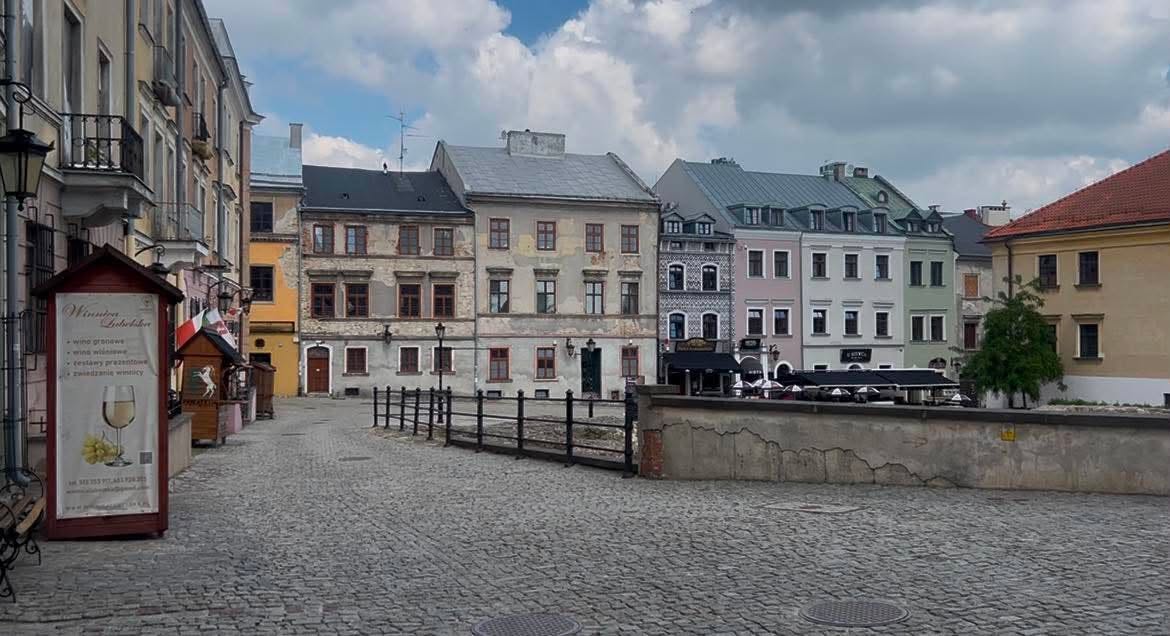
The Old Town – the Heart of Lublin That Has Been Beating to the Same Rhythm for Centuries
There are places that cannot be rushed through. You can tick off the most important monuments, take a few photos, and move on, but then it's easy to miss what is most precious about them. The Old Town in Lublin belongs to such spaces. It does not dazzle with the monumental splendor known from the largest European metropolises nor with the grandeur of royal residences. Instead, it offers something much more valuable – the atmosphere of a city that has developed at its own pace for centuries and can still tell its story at every step.
The best way to experience this is early in the morning, before the cobbled streets fill with tourists and the restaurant gardens come alive. In the first rays of sunlight, the facades of Renaissance tenements take on warm, golden hues, and the silence is broken only by the sound of footsteps echoing against the ancient walls. During this time, it is hard to shake the feeling that time flows a bit slower here than in other parts of the city.
This very atmosphere is what has made Lublin's Old Town regarded as one of the best-preserved historic urban centers in Poland for years. However, it is not a closed museum or an outdoor museum. People still live in the historic tenements, restaurants, art galleries, and small cafes operate, while concerts, performances, and cultural events take place in the squares. History has not been locked behind glass here – it is still present in the daily life of the city.
A City Surrounded by Walls
Although modern Lublin stretches far beyond its historical center, for many centuries, all city life concentrated on a small area surrounded by defensive walls. Their task was to protect residents from invasions but also to control the movement of merchants and travelers coming to the city.
There were once two main gates leading to the Old Town – Kraków and Grodzka. Each had its own significance and led in different directions. Kraków Gate opened the way to the west, toward Kraków and the rest of the Crown lands, while Grodzka Gate connected the city with the castle and the former Jewish district.
Although most of the medieval defensive walls have not survived to this day, their former paths can still be read from the layout of the streets and the arrangement of monuments. A walk through the Old Town is thus not only a pleasure but also a journey through the medieval urban planning that has survived for nearly seven centuries.
Kraków Gate – The City’s Symbol
Every journey through the historic center of Lublin should begin here. Kraków Gate is not just one of the city's most important monuments. It is its symbol, a recognizable sign, and the place from which for generations walks through the Old Town have begun. When standing before its massive structure, it is hard to believe that this building remembers the reign of Casimir the Great. Erected in the 14th century as part of the city's defensive system, it has served as a guardhouse, a lookout point, and a representative entrance to Lublin for centuries.
Passing under the Gothic vault of the gate, one easily gets the impression of crossing an invisible boundary between modernity and history. Behind you is the bustling city center, and before you unfolds a world of cobbled streets, historic tenements, and places that remember the time of the greatest glory of the Commonwealth.
It's worth pausing here for a moment and looking up. The tower of Kraków Gate has changed its appearance numerous times over the centuries, yet it remains one of the most characteristic elements of the Lublin skyline. Its clock has marked the rhythm of life for generations, and the bugle call played every day serves as a reminder of the city's centuries-old history.
First Steps in the Old Town
Beyond Kraków Gate starts a world best explored at a leisurely pace. Although the distances are not great, it’s worth giving up on precisely planning every minute. Lublin rewards those who allow themselves a bit of spontaneity. It’s enough to turn into a side street, peek into a small courtyard or enter one of the open tenements to discover a place not found on the map or in the guidebook. It is in such moments that the difference between sightseeing and getting to know the city becomes most apparent.
Strolling down Bramowa, Grodzka, or Złota streets, you can see that nearly every tenement has its own story. Some belonged to wealthy merchants, others to craftsmen or representatives of urban guilds. Many were reconstructed over the centuries, allowing traces of Gothic, Renaissance, Baroque, and Classicism to be found on their facades. This architectural layering is one of the greatest advantages of Lublin’s Old Town. History has not been replaced here by modernity; instead, it has gradually added new chapters to the existing story.
The Market – The Place Where Everything Began
After a few minutes' walk, visitors are greeted by the Market – a space that has been the center of city life for centuries. Today, it is hard to imagine a quieter corner. In the outdoor cafes, the sounds of tourists' conversations can be heard, music flows from the windows of tenements, and children play around the historic well. Hundreds of years ago, this place looked entirely different. It was here that fairs took place, municipal celebrations occurred, public announcements were made, and trials and executions were held. The Market was the commercial heart of Lublin and a meeting place for merchants arriving from various parts of Europe.
The tenements surrounding the square are now among the most beautiful examples of Lublin Renaissance architecture. Each has its own story, and their richly decorated facades testify to the wealth of their former owners. It’s worth taking a moment to examine the details – ornaments, attics, and portals that often escape those focused solely on taking a commemorative photo. Walking around the marketplace, it's hard to shake the feeling that this place was made to stop and stay for longer. Unlike many historic squares in Europe, there is no rushing here. The atmosphere invites conversations, observing urban life, and discovering more stories recorded in the walls of the surrounding tenements.
The Market was laid out shortly after the city was granted Magdeburg rights in 1317. From the start, it served as a commercial, administrative, and social center. Weekly markets and large fairs that attracted merchants from across the Commonwealth and distant lands of Europe were held right here. Grain, salt, spices, cloth, artisan products, and luxury goods were sold, and the hum of conversations conducted in many languages was a daily occurrence.
Today, it's hard to imagine that image. Instead of wooden stalls, there are outdoor restaurants, and the calls of merchants have been replaced by conversations between residents and tourists. However, the Market has retained something much more valuable than its former functions – an atmosphere that makes one want to stay here longer.
The Crown Tribunal – A Witness to the Most Important Trials of the Former Commonwealth
On the southern side of the market, the attention of almost every visitor is drawn to the monumental building of the former Crown Tribunal. Although its current appearance is the result of numerous reconstructions, this place has played an exceptionally important role in the city’s life for centuries.
Since the end of the 16th century, it served as the highest appellate court for the nobility of Little Poland. Representatives of the most distinguished families, lawyers, witnesses, and petitioners came to Lublin, waiting for decisions on cases that often involved vast estates and great political disputes.
One can imagine the buzz that must have filled the market at that time. In front of the building, those interested in the process gathered, messengers delivered documents, and townsfolk lively commented on the verdicts. For many years, the Crown Tribunal symbolized justice, although – as one of the most well-known Lublin legends shows – people did not always believe that earthly courts could issue fair judgments.
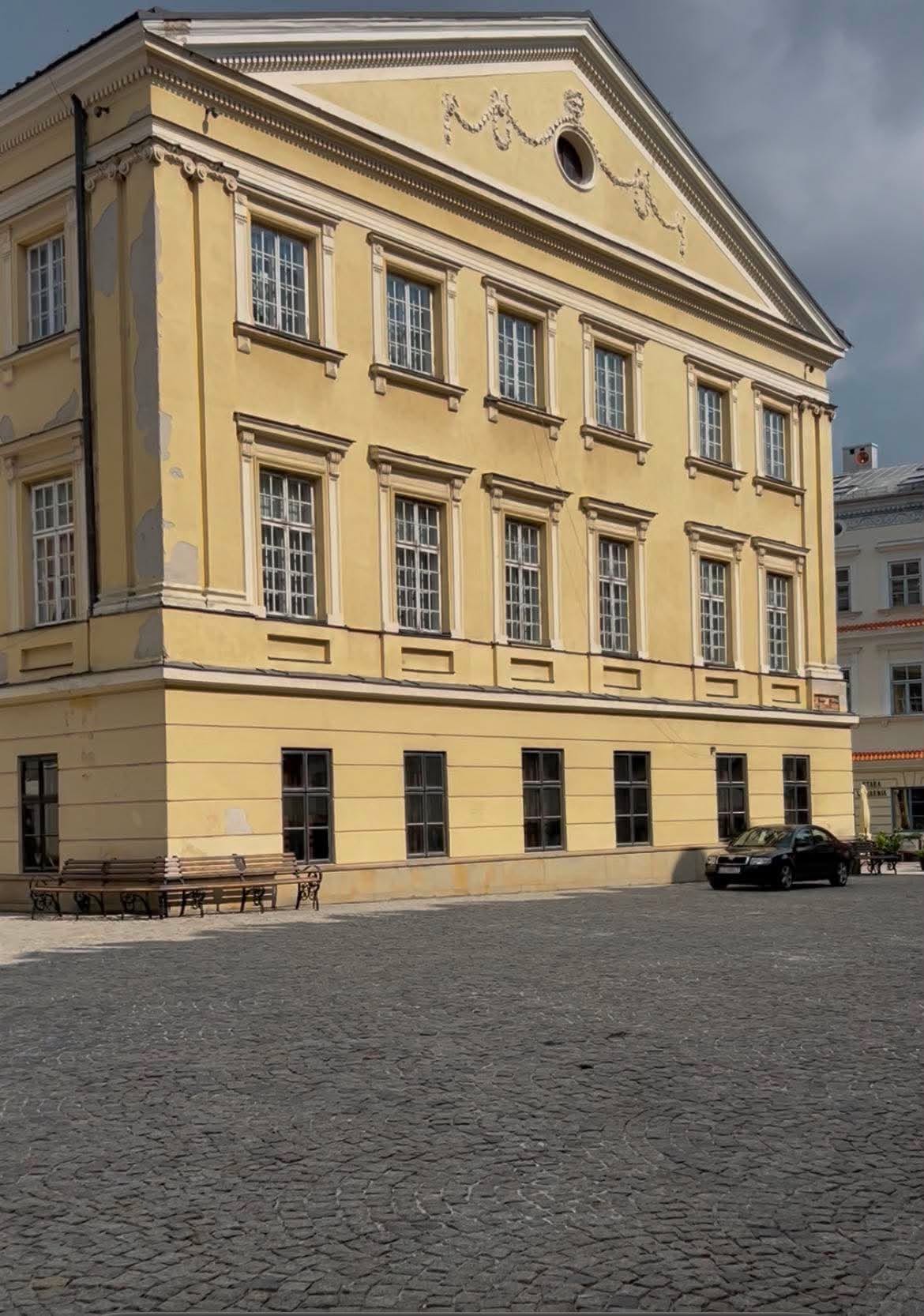
The Legend of the Devil's Paw
Few Polish cities can boast a legend that has so firmly become part of the local identity as the story of the Devil's Paw. According to the tale passed down through generations, a poor widow struggled for many years to regain her land taken by a powerful nobleman. When the Crown Tribunal again issued an unjust verdict, the distraught woman was said to have remarked that she would be judged more justly by devils themselves.
That very night, mysterious judges appeared in the courtroom. Clothed in noble attire, they issued a favorable ruling for the widow, and the presiding judge – who was, in fact, the devil – left the burned imprint of his hand on the table. According to legend, this mark can be seen to this day. Although the tale is, of course, fairytale-like, it perfectly illustrates how significant a place the Crown Tribunal held in the consciousness of Lublin's former residents. It is these kinds of stories that make exploring the city something more than just looking at monuments. Each building begins to tell its own story.
The Stone of Misfortune – One of Lublin's Most Mysterious Relics
A few steps away from the market lies an object that many tourists pass by unaware of its fascinating history. The Stone of Misfortune, an inconspicuous boulder positioned today near the Former Parish, has been surrounded by numerous legends for centuries. According to one, it was brought to the city by the devil, who intended to destroy Lublin. Another story claims it was a place where ancient death sentences were carried out, while yet another assigns it supernatural properties that bring bad luck to anyone who dares to touch it or sit on it. It is hard today to determine how much truth lies in these tales. However, one thing is certain – the Stone of Misfortune has, for generations, stimulated the imagination of locals and guides who smile as they watch tourists ponder whether it is worth verifying the truth of this old superstition. Such places remind us that the city's history does not consist solely of dates and facts. It is also shaped by legends that for centuries helped its residents explain that which they could not otherwise understand.
A City Best Discovered on Foot
One of Lublin’s greatest advantages is its scale. Most of the important attractions are located within a short distance from each other, allowing the entire Old Town to be explored without using a car or public transportation. This is a city made for walkers. The cobbled streets encourage a leisurely discovery of more corners, and the numerous passages, stairs, and courtyards mean that even repeat visitors to Lublin can find a place they haven't noticed before.
It is not worth planning only a list of monuments to tick off. It is much better to allow yourself a moment of improvisation. Stop at a small café, peek into an art gallery, sit on a bench with a view of old tenements, or listen to the stories of guides leading groups of tourists. It is precisely in those moments that it is easiest to understand why Lublin is so often described as a city with a soul.
A Moment Where the Real Walk Begins
When you pass under the arch of Kraków Gate, you will almost instinctively slow your pace. This happens not because the cobblestone demands more cautious movement. The reason is much simpler – the surroundings encourage you to look more closely. To your left, you will notice the first Renaissance tenements, before you a street opens leading towards the Market, and from nearby cafes wafts the aroma of freshly ground coffee. On warm days, you can hear the conversations of residents and tourists, the music of street artists, and the sound of footsteps echoing against the old walls.
Here is where most visitors begin to realize that Lublin does not try to impress with grandeur. Its strength lies in its atmosphere. In the ability to create a mood that makes us absorb the city instead of ticking off more points on the map. And maybe that is exactly why so many travelers later recall not a specific monument but the moment of walking through Kraków Gate. Here, ordinary sightseeing ends, and a true journey through one of the most fascinating cities in Eastern Poland begins.
Former Parish Square – A Place That No Longer Exists
There are places that enchant with what can be seen. There are also those whose strength lies in what is no longer there. The Former Parish Square belongs to the latter category. At first glance, it seems a calm, open space between the historic tenements of the Old Town. Only after a moment does the gaze stop at the stone outlines of the foundations that trace the layout of the former temple. They remind us that less than two hundred years ago, a church dedicated to St. Michael the Archangel – the first parish of Lublin and one of the most important temples of the medieval city – stood in this very spot. There is no longer the tall tower visible from many kilometers away, no sound of bells, nor the bustle of the faithful leaving the service. Only the space remains, which tells a story about transience in an incredibly subtle manner. Perhaps that is why the Former Parish Square so strongly stimulates the imagination. It imposes no interpretation. It encourages stopping and personally filling in the narrative.
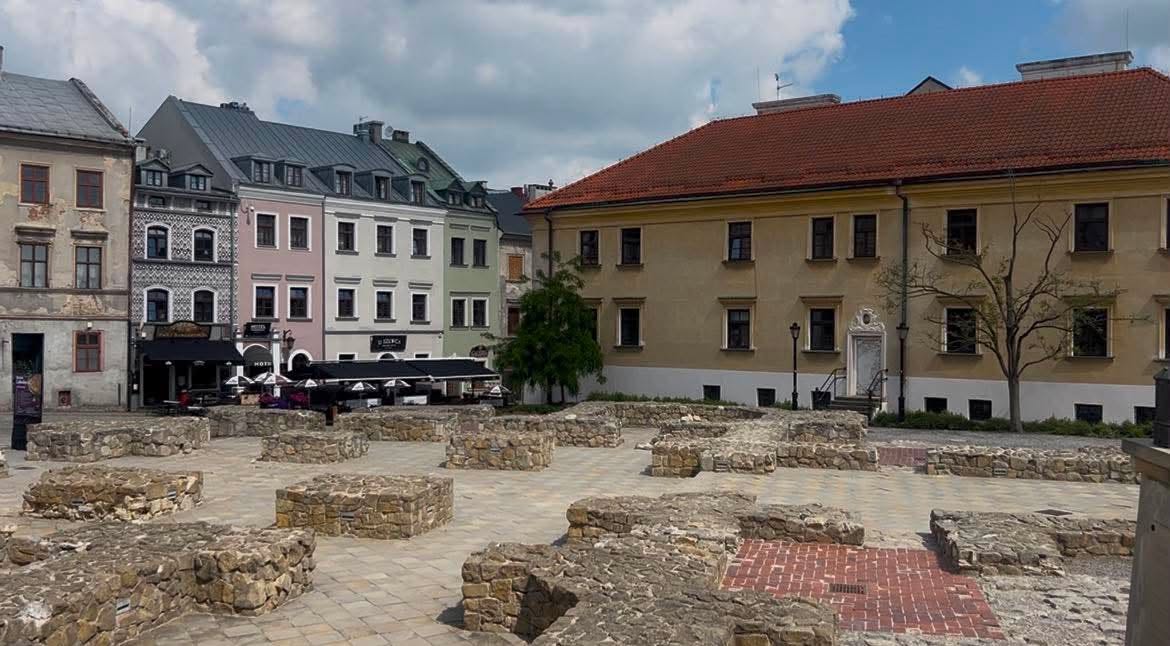
The Church Where Everything Began
Before Lublin became one of the most important cities of the former Commonwealth, it needed a place that would gather the religious and social life of its residents. This role was played by the Church of St. Michael the Archangel, commonly referred to as the Parish.
According to the most popular legend, the founder of the temple was Prince Leszek the Black. After a victorious expedition against the Yotvingians, he was said to have made a vow to build a church at the place of his dream, in gratitude for his victory. The story tells that St. Michael the Archangel appeared to him in a dream under an old oak, encouraging him to take up the fight. Regardless of how much of this story is legend and how much is fact, it has long constituted an important element of the local tradition and remains one of the most beautiful tales related to the beginnings of Lublin.
Historical sources confirm that the Church of St. Michael was one of the oldest temples in the city and served as the main parish church for many centuries. With the development of Lublin, it was frequently reconstructed and expanded. In the 15th century, it received a mighty tower that dominated the city’s skyline and was visible from miles away. For travellers approaching Lublin, it was a sign that the destination was close.
A Temple That Grew with the City
The fate of the Church of St. Michael reflected the history of Lublin itself. In periods of great flourishing, the temple was expanded and beautified. After fires and wartime destruction, it was rebuilt, striving to restore its former glory. The greatest catastrophe was the great fire of the city in 1575, which consumed a significant portion of the Old Town's buildings. The flames did not spare the parish church either. Its tall tower, previously regarded as one of the most characteristic elements of Lublin's skyline, collapsed. The reconstruction took many years, while the following centuries brought additional remodels and repairs.
However, time proved to be the adversary that could not be defeated. By the 19th century, the church's structural state had deteriorated to the point that a decision was made to demolish it. For the residents, this must have been an extremely painful moment. The building that had witnessed baptisms, weddings, funerals, and the most important city events for centuries vanished almost entirely from the landscape. Its furnishings were moved to other churches, and the temple itself was dismantled in 1857.
A Memory Carved in Stone
For decades, nothing reminded of the former church except the memories of the residents and a few archival engravings. It was only during archaeological excavations conducted in the 20th century that preserved fragments of the foundations were discovered. During the revitalization of the Old Town, it was decided to expose their outlines, allowing contemporary visitors to see the actual scale of the temple and imagine its former structure. A model of the church has also been placed nearby to help reconstruct its appearance.
This solution makes the Former Parish Square not just an ordinary archaeological site. It is a space for dialogue between the past and the present. One does not view ruins in the traditional sense here. One sees a trace of a building that contributed to the city’s panorama and identity for centuries.
A Panorama that Tells a Story
If there is a place in Lublin where it is truly worthwhile to stop without haste, the Former Parish Square is very high on that list. Just approach the eastern edge of the square and look towards Lublin Castle.
Before your eyes unfolds one of the most beautiful panoramas of the city. In the foreground, the castle hill with its keep and the Chapel of the Holy Trinity is visible, further on the valley where the Bystrzyca, Czechówka, and Czerniejówka rivers converge, and to the left, the Czwartek hill with the Church of St. Nicholas – one of the oldest churches in Lublin. This view helps to understand why medieval life developed right here.
Not surprisingly, many photographers return to this spot at various times of the day. At dawn, the panorama is wrapped in soft light, while in the evening, the illuminations of the Castle and the Old Town create one of the most picturesque images of Lublin.
The Lublin Archcathedral and the Trinitarian Tower
There are places that one enters almost instinctively. The monumental structure of the temple attracts the eye, encouraging one to cross the threshold and see the interior. The Lublin Archcathedral, however, works differently. Even from Katedralny Square, it is hard to shake the feeling that it is not merely another monument on the sightseeing route. It creates a space where faith, art, and the city’s history have converged for over four hundred years.
The square that opens before the temple has a unique character. It is not as large as the great squares of European capitals, but thanks to that, it has retained its intimacy. The tall silhouette of the Trinitarian Tower closes its perspective, and the bright facade of the archcathedral means that even on a cloudy day, the place seems full of light. This is one of those corners of Lublin where it is worthwhile to sit for a moment and allow the city to tell its story.
A Temple that Changed the City’s Face
At the end of the 16th century, the Jesuits arrived in Lublin – an order that played a huge role in the history of education, culture, and religious life in the former Commonwealth. Soon, they began to build a grand church and a college, creating one of the most important architectural complexes in the city. The temple was erected according to the design of the Italian architect Giovanni Maria Bernardoni, inspired by the Roman church of Il Gesù – a model for many Jesuit temples in Europe.
For the residents at that time, it was an extremely modern building. Its Baroque form stood in stark contrast to the Gothic churches and medieval buildings of the city. The Jesuits didn’t want merely to create a place for prayer. They aimed to build a space that would speak to the imagination of the faithful through light, music, architecture, and art. Even today, it is difficult to shake the feeling that this intention was fully realized.
The Interior That Surprises at First Glance
Upon entering through the main doors, the gaze almost immediately turns to the ceiling. Even those who have visited many Baroque temples often stop here longer. This is due to the illusionistic polychromes by Józef Meyer, created after the temple was rebuilt following a fire in the mid-18th century. Thanks to the masterful play of perspective, flat surfaces seem to open up to the sky, making the architecture feel far more sprawling than it actually is.
This is one of the most beautiful examples of illusionistic painting in Poland. It is worth taking your time while exploring. Instead of rushing straight to the altar, it is good to pause in the middle of the nave and simply look. Only after a few minutes can one discern the subtlety of the composition, the play of light, and the remarkable precision with which the artist created the impression of space. Such places remind us that Baroque art was not solely meant to dazzle with the wealth of decorations. It was meant to stir emotions and lead humans to reflection.
The Sacristy Where Whispers Travel Along the Walls
One of the greatest surprises of the archcathedral is a place that many visitors initially do not even plan to see. The acoustic sacristy has long intrigued both tourists and architecture enthusiasts. It is enough to stand in two opposite corners of the room and speak very quietly for the other person to hear every word almost as clearly as if they were standing right next to you. This is the result of the interior's thoughtful construction and the proper directing of sound waves.
Such places show that old architecture can astonish not only with beauty but also with the ingenuity of its creators. The sacristy serves as proof that the knowledge of builders from centuries ago can still evoke admiration.
A Story of Tears That Moved All of Poland
The story of the archcathedral does not end with architecture. In July 1949, something happened here that has forever remained in the memory of Lublin's residents. The faithful praying before a copy of the image of Our Lady of Częstochowa noticed traces reminiscent of tears on Mary's face. News of this event spread rapidly across the country, drawing thousands of pilgrims to the temple. Today, this event is known as the Lublin Miracle and remains one of the most important elements of the contemporary history of the archcathedral.
Regardless of individual views on the event, its significance for the residents of the city cannot be overstated. For many days, the square in front of the temple was filled with crowds of the faithful, and Lublin became a pilgrimage destination from all over Poland. This story shows that the archcathedral is not merely a monument of past epochs. It remains an important place of religious and spiritual life.
The Tower from Which Lublin Can Best Be Understood
Right next to the archcathedral stands the Trinitarian Tower – one of the city's most characteristic symbols. Its history is far more complex than one might think. Originally, it was not a bell tower but a gate leading to the Jesuit complex. Only over time was it raised, and in the 19th century it acquired its neo-Gothic appearance, which it still retains today. The name refers to the short period when the Trinitarians took over the buildings after the Jesuits were suppressed.
Today, inside the tower is the Archdiocese Museum of Lublin, presenting valuable collections of sacred art. However, for many visitors, the main attraction remains the observation deck. After climbing over two hundred stairs, the reward is a panorama that allows one to view Lublin from a completely different perspective. The Old Town looks like a plan of a medieval city, church towers rise above the rooftops, and the castle hill with the Lublin Castle is clearly visible on the horizon. This is the highest publicly accessible viewpoint in the city and one of those places that helps to understand its layout and history.
Lublin Castle – The Guardian of the City’s History
Few places in Lublin can leave such a strong impression from afar. Just stand in the Former Parish Square and look eastward. Above the green of trees and the rooftops of buildings rises the bright structure of Lublin Castle. Dominating the area, it has for centuries reminded us of the significance of the hill from which the city’s history began. Although the modern appearance of the castle differs from the medieval fortress, the hill itself remains a place of exceptional historical continuity. It was here that one of the oldest defensive strongholds on the lands of present-day Lublin was founded. From here, trade routes leading from the west to Ruthenia and Lithuania were controlled, the valleys of three rivers were observed, and the safety of the growing settlement was monitored. A walk towards the castle is not merely a transition between attractions. It is a journey to the place where the story of the city began.
The Hill from Which Everything Began
Long before Lublin was located, a defensive stronghold existed here. Its location was not accidental. The hill, surrounded by marshy grounds and river valleys, provided natural protection while allowing control over important trade routes running through Eastern Europe.
The first fortifications were wooden and earthen. Over time, they were replaced by increasingly solid constructions, corresponding to the growing significance of the city. During the reign of Casimir the Great, the construction of a brick castle began, which became part of the defensive system of the Kingdom of Poland.
Although it has been several hundred years since those events, walking along the castle hill, one can still feel why this place was chosen for the first fortress. The view encompasses almost the entire historic center of Lublin, and the natural terrain allows for an understanding of medieval defense strategies.
The Royal Castle
During the time of the Jagiellonian dynasty, Lublin Castle ceased to be merely a fortress. It increasingly served as a royal residence and a meeting place for rulers, diplomats, and nobility.
Kings heading for Lithuania or returning from Vilnius to Kraków would come here. In the castle chambers, discussions about state matters took place, foreign delegations were received, and decisions affecting the fate of the entire Commonwealth were made.
A particularly significant year in the castle's history is 1569. It was in Lublin that the Union of Lublin was signed, creating the Commonwealth of Both Nations. Although the parliament's sessions were held in various places around the city, the castle was one of the central points of the events that changed the map of Europe.
Looking today at the calm hill, it is hard to imagine that decisions influencing the fate of millions of people were made right here.
A Fortress, a Palace, and a Prison
However, the history of the castle was not an uninterrupted string of glory. After a period of peak prosperity, the significance of the residence gradually diminished. The wars of the 17th century and subsequent destruction led to severe degradation of the building. The former royal residence fell into ruin, and its fate remained uncertain for a long time.
The most surprising transformation took place in the 19th century when, on the site of the destroyed castle, a monumental prison building was erected. The design was kept in