

Polesie
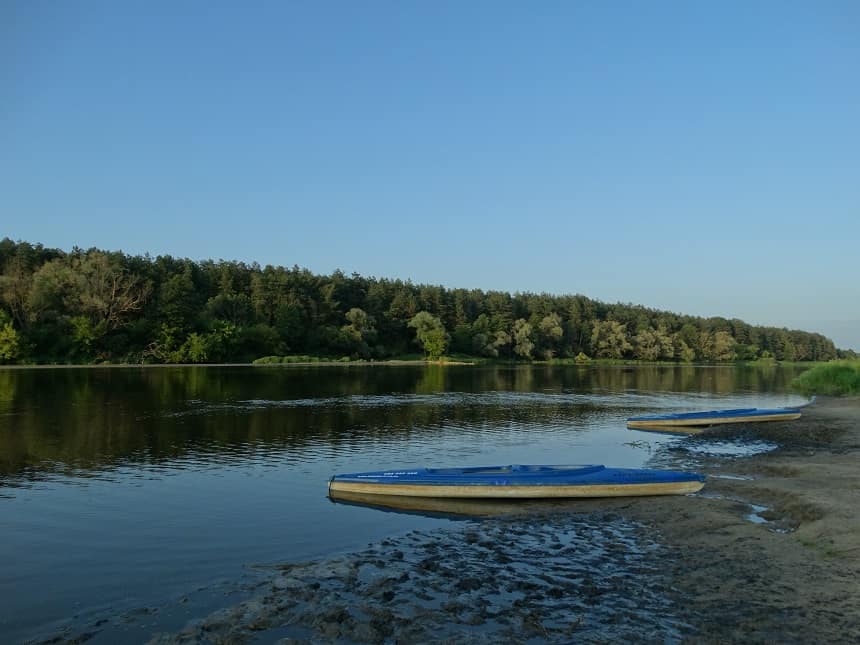
Polesie – a land of silence, lakes, and nature. A complete guide to one of the most extraordinary regions of Poland.
There are places in Poland that captivate immediately with their monumental mountains, wide beaches, or historic old towns full of tourists. However, there are also regions that do not try to draw attention to themselves with spectacular attractions. Their greatest wealth lies in tranquility, naturalness, and a sense of harmony with the surrounding nature. One such place is Polesie – a vast land of lakes, peat bogs, marshes, and forests, where the rhythm of the day has been defined for centuries by the changing seasons, water levels, and the life of wildlife.
For many, Polesie remains one of the least explored regions of Poland. Most tourists associate the name primarily with the Poleski National Park or the lakes in the vicinity of Włodawa and Urszulin; however, the reality is much richer. Polesie is not just a national park or a single tourist attraction. It is a unique geographical and cultural region, the character of which has been shaped over centuries by vast wetlands, shallow lakes, endless meadows, and small villages scattered among the forests. Thanks to these natural conditions, the region has retained its peaceful character and remains one of the most authentic corners of Poland to this day.
Walking through Polesie, it is hard to shake the impression that time flows differently here. There is no ubiquitous rush or crowds typical of the most popular tourist destinations. Instead, there are paths leading through peat bogs, wooden walkways over marshy areas, calm lake surfaces reflecting the sky, and vast reed beds that provide shelter for hundreds of bird species. This is a landscape that does not dominate over humanity, but gradually allows one to find peace and notice what often goes unnoticed in everyday life.
Polesie is also one of the most valuable natural regions in Europe. Ecosystems have survived here that have long since disappeared from many other parts of the continent. Extensive peat bogs, marshes, and natural water reservoirs provide refuge for rare plant and animal species, particularly birds, whose presence has attracted nature lovers from all over Poland and abroad for decades. Polesie is rightfully called one of the most important bird areas in Europe, and the morning sounds of cranes, bitterns, or waders have become a symbol of this extraordinary landscape.
At the same time, Polesie is not only a tale of nature. It is a region with a rich history and a multicultural heritage, where for centuries Poles, Ukrainians, Jews, and representatives of other nationalities lived side by side. Traces of this past can be found in historic churches, Orthodox churches, old cemeteries, and small towns that have retained their unique character to this day. However, the region's history does not dominate its contemporary face – it becomes a natural complement to a landscape that is constantly the most important hero of this story.
It is this extraordinary balance between nature, history, and tranquility that makes Polesie hard to compare with any other region of Poland. Visitors do not come here to see as many attractions as possible in one day. What matters far more is experiencing the place itself – listening to the sounds of nature, observing the changing light over the lakes, walking along wooden walkways through the peat bogs, or taking a moment to rest on the shore of one of the Polesie lakes. It is from such seemingly simple moments that memories arise, remaining with travelers for many years.
In this guide, we invite you to discover Polesie step by step. You will learn about the region's history, its extraordinary nature, the most interesting towns, the most beautiful hiking and biking trails, the best spots for birdwatching, trip suggestions, and practical tips to help you plan your stay. We want to show not only the places worth visiting but, above all, to tell the story of a region that, despite its uniqueness, remains one of the biggest and most beautiful mysteries of Poland.
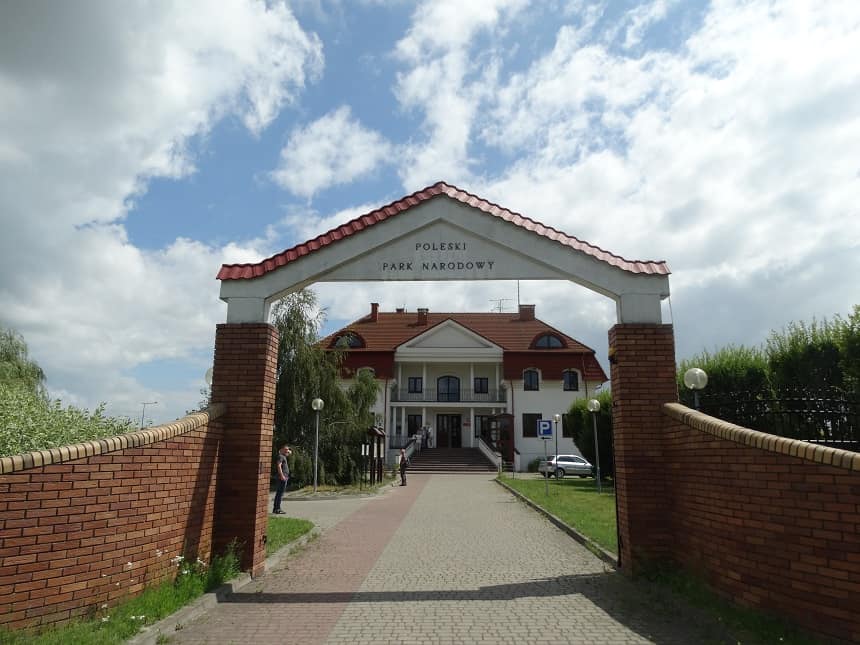
Poleski National Park – a kingdom of peat bogs, lakes, and wildlife
If there is a place that best reflects the character of Polesie, it is undoubtedly the Poleski National Park. It is here that landscapes have been preserved that once covered vast areas of Central Europe just a few centuries ago, and today are among the rarest and most precious ecosystems on our continent. Extensive peat bogs, marshy meadows, swamps, shallow lakes, and forests create a mosaic of habitats, making the park one of the most important nature reserves in Poland.
The history of the park dates back much further than its official establishment. As early as the 1930s, Professor Władysław Szafer pointed out the need to protect the landscapes of Polesie. Subsequent concepts were developed by, among others, Professor Tadeusz Wilgat and Professor Dominik Fijałkowski, whose project became the direct basis for creating the park. Ultimately, on May 1, 1990, the Poleski National Park was established, covering an area of 4,813 hectares, becoming the first national park in Poland primarily protecting wetland-peatland ecosystems. Just four years later, its boundaries were nearly doubled, and today the park encompasses 9,760.29 ha, while the buffer zone occupies an additional 13,702.77 ha.
Located in the western part of the Lublin Polesie, the park protects an extraordinarily rare landscape shaped by water. Low, transitional, and high peat bogs dominate here, as well as extensive marshes, waterlogged meadows, and lakes of very diverse origins. Some of them formed as a result of karst processes occurring in the limestone subsoil, while others are remnants of former water reservoirs associated with glacial activities. This diversity allows the small area of the park to house an extraordinary wealth of natural habitats.
One of the biggest treasures of the Poleski National Park is its peat bogs. In many places, the layer of peat reaches several meters in thickness, and the process of its formation has been ongoing for thousands of years. Peat bogs serve an incredibly important function: they store large amounts of water, mitigate the effects of drought, bind significant quantities of organic carbon, and create conditions for species that occur almost nowhere else. Their preservation requires maintaining appropriate groundwater levels, which is why one of the most important tasks of the park is restoring natural water relations disrupted by past drainage and hydrotechnical investments.
The park is also famous for its lakes, of which there are several dozen. Among the most well-known are Lake Łukie, the largest natural lake within the park, Moszne, surrounded by high peat bogs, Długie, Karaśne, and Bagno Bubnów – an extensive peatland complex being one of the most important breeding sites for aquatic and marsh birds in Poland. Each of these areas has its own character and allows you to see a different face of the Polesie nature.
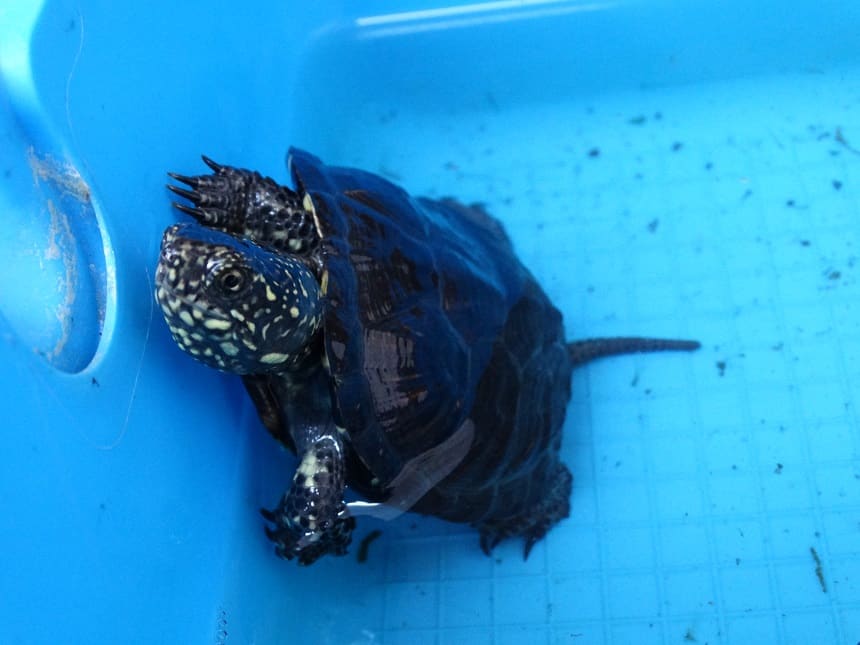
The park's richness extends to the animal kingdom. More than 200 bird species have been recorded here, of which about 150 breed regularly. For many nature enthusiasts, Poleski National Park is one of the best places in Poland to observe cranes, marsh harriers, bitterns, terns, and lesser spotted eagles. However, the symbol of the park remains the European pond turtle – the only native turtle species found naturally in Poland. Polesie is one of the most important areas for its protection, and programs for active conservation have contributed to the improvement of this rare population's status.
The flora is equally impressive. Peat bogs are home to sundews – small carnivorous plants adapted to poor habitats, numerous species of orchids, cotton grasses creating characteristic white “carpets” in spring, and common bog, whose intense scent has been associated with Polesie wetlands for centuries. In many places, you can also encounter relics of glaciation – species that have survived here since the end of the last glaciation.
Poleski National Park is also a well-prepared place for exploring nature. Several educational trails pass through the most valuable fragments of peat bogs and forests. Wooden walkways allow safe passage through waterlogged areas, while towers and observation platforms provide excellent views of the sprawling panoramas of the marshes and a chance to watch birds without interfering with their natural habitats. Thanks to this, the park can be explored at a leisurely pace, noticing details that are easy to overlook during rapid visits.
The significance of Poleski National Park goes far beyond the borders of Poland. In 2002, this area was incorporated into the UNESCO Biosphere Reserve “Western Polesie”, and since 2012, it has been part of the Transboundary Biosphere Reserve “Western Polesie”, which also includes valuable areas of Belarus and Ukraine. This is confirmation that the landscapes protected here belong to the most valuable wetlands in Europe and have significance not only nationally but also internationally.
A Look from MiejscaPolski.pl
Most people visiting Poleski National Park come with the intention of seeing a specific nature trail or a single lake. However, it is worth dedicating a whole day and allowing yourself to slowly discover this place. Polesie does not delight with a single spectacular view. Its greatest wealth is diversity – the landscape changes almost every kilometer, and the longer you stay, the easier it becomes to understand why scientists have fought for nearly a hundred years to protect this region at the highest level of nature conservation.
Włodawa – a city of three cultures at the intersection of history and nature
Włodawa is one of those cities that cannot be described solely through the lens of monuments or tourist attractions. Its uniqueness arises primarily from the history of the borderland – a place where various nations, religions, and traditions have met for centuries. Located by the Bug River, just a few kilometers from the borders with Belarus and Ukraine, it has been an important trading center connecting the east and west of Europe for centuries. Today it has around 13,000 residents, but its historical significance is much greater than its size may suggest.
The beginnings of Włodawa date back to the Middle Ages. The first mentions of the settlement come from the 13th century, and it received city rights in the first half of the 16th century. Its favorable location along the Bug River made it a significant center for trade exchange. The routes connecting the Crown with the Grand Duchy of Lithuania, and later with Volhynia and Podolia, passed through the city. Merchants brought salt, grain, wood, furs, and handicrafts, which allowed Włodawa to develop as a multicultural border center.
However, the most characteristic feature of the town has been the diversity of its inhabitants. For centuries, Catholics, Orthodox Christians, and Jews lived side by side, creating a community that left behind a unique architectural and cultural heritage. Few places in Poland have retained such a clear arrangement of three religious traditions, which is why Włodawa is often referred to as the “city of three cultures”. This very history became an inspiration for the annual Festival of Three Cultures, one of the most important cultural events in eastern Poland.
The most valuable monument in the city is undoubtedly the 18th-century synagogue complex, regarded as one of the best-preserved of its kind in Poland. Its central element is the Great Synagogue, built between 1764 and 1774 according to a design by Paweł Antoni Fontana. The monumental structure dazzles with its Baroque shape and spacious interior, which includes an impressive Neo-Baroque aron ha-kodesh from 1936. Today, it houses a branch of the National Museum in Lublin dedicated to the history and culture of the Jewish community in the region. Nearby are the Small Synagogue and the former Community House, creating a unique complex of immense historical value.
Walking around Włodawa, it is also hard not to notice the Christian temples. Dominating the city’s skyline is the Baroque St. Louis Church, also designed by Paweł Antoni Fontana. The temple is distinguished by its richly decorated interior, rococo sculptures, and 18th-century polychrome. A few hundred meters away is the neoclassical Nativity of the Blessed Virgin Mary Church, built between 1840 and 1842, reminding us of the centuries-long presence of the Orthodox community in these areas. The small distance between the most important temples of different denominations perfectly illustrates the character of the old Włodawa as a city of cultural dialogue.
The history of Włodawa was painfully interrupted during World War II. Before 1939, the Jewish population made up a significant part of the city's residents and played an important role in its economic and social life. However, the German occupation led to the almost total destruction of this community. Today’s museum, preserved monuments, and annual cultural events serve as reminders of this centuries-old presence and are an important element of memory about the town's former inhabitants.
Although Włodawa captivates with its monuments, its great advantage is also its location. It is an excellent base for exploring the entire Polesie. Within a radius of several kilometers are the Poleski National Park, the lakes of the Łęczna-Włodawa Lakeland, the picturesque Bug Valley, and the popular Okuninka by Lake Białe. This allows for a combination of city sightseeing with active leisure in nature, making Włodawa one of the best starting points for discovering the region.
At the southern edge of the town, it is also worth visiting Orchówek, which houses a late Baroque sanctuary dedicated to Our Lady of Consolation. The Bug Valley, one of the last large, unregulated rivers in Europe, also runs nearby. The river itself serves as an important ecological corridor and is one of the symbols of the borderlands, long defining state boundaries while also connecting people through trade, culture, and shared history.
Modern Włodawa does not compete with the biggest cities in Poland in terms of the number of attractions. Its strength lies in its authenticity. This is a place where history has not been confined to the walls of a museum, but is still present in the layout of streets, architecture, and the atmosphere of the town. A stroll through the market square, a visit to the synagogue complex, or a moment spent by the Bug allows one to understand why Włodawa has for centuries been one of the most important towns on the border and why it remains one of the most extraordinary places on the map of eastern Poland.
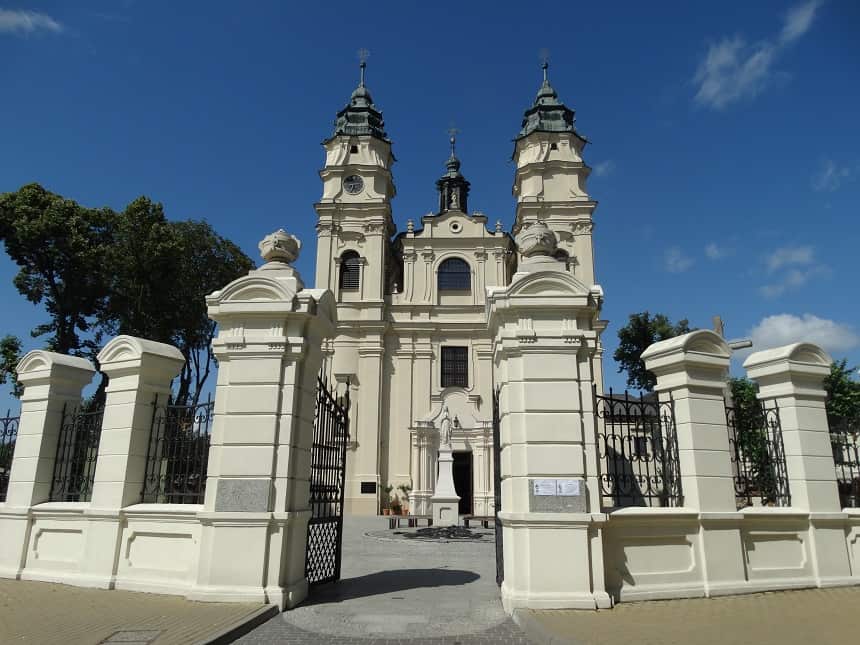
Urszulin – the heart of Polesie and the best starting point for discovering the region
Although Urszulin is a small village with fewer than two thousand residents, it plays a unique role on the tourist map of Polesie. This is where the headquarters of Poleski National Park is located, and the village has long served as the informal capital of the Polish part of Polesie. Nestled between lakes, peat bogs, and expansive forests, Urszulin is the perfect base for exploring one of Europe’s most valuable natural regions.
The history of Urszulin dates back to the 16th century. The village was founded around 1510, and its name comes from Urszula Daniłowicz, wife of the Grand Marshal of the Crown, Stanisław Lubomirski. Through the centuries, it developed as a small agricultural settlement, with its inhabitants living in close dependence on the surrounding nature. Vast marshes, peat bogs, and lakes long hindered communication with other parts of the country but simultaneously allowed for the preservation of a landscape that is now regarded as one of the most unique in Poland.
A turning point in the village’s history was the establishment of Poleski National Park on May 1, 1990. Since then, Urszulin has become the administrative center of the park, as well as the place from which most tourists begin their exploration of the protected areas. The park’s headquarters includes a modern Educational and Museum Center, where visitors can learn about the history of Polesie, view exhibits dedicated to peat bogs, lakes, and the animals inhabiting the region, as well as gather up-to-date information on trails, nature paths, and events organized by the park.
It is from Urszulin that it is easiest to reach the most well-known educational trails of Poleski National Park. Within a short distance are the famous routes leading through Bagno Bubnów, Dominik Oak, Perehod, and the vicinity of Lake Moszne, where wooden walkways allow safe passage through extensive peat bogs. Each of these trails provides a glimpse into different aspects of Polesie – from pine and alder forests to open marshes and lakes surrounded by reed beds.
One of Urszulin's greatest assets is its location. Within a radius of several kilometers, there are dozens of lakes of the Łęczna-Włodawa Lakeland, as well as numerous hiking, cycling, and kayaking trails. This makes the village an excellent base for both active recreation enthusiasts and those seeking peace and contact with nature. Unlike the more touristy towns in the region, Urszulin has retained a tranquil, intimate character that perfectly aligns with the entire atmosphere of Polesie.
The area around Urszulin is also abundant in birdlife. The sprawling peat bogs and waterlogged meadows are among the most important breeding grounds for many rare species in Poland. In spring and autumn, one can observe cranes, bitterns, marsh harriers, terns, herons, as well as numerous species of ducks and geese. It is no coincidence that Polesie has been attracting ornithologists and nature photographers from all over Europe for years. For many of them, Urszulin is the first stop on every expedition.
The surroundings also delight with a wealth of vegetation. In the peat bogs, one can spot sundews – small carnivorous plants, several species of orchids, cotton grasses, and common bog. Here, one can best understand why Polesie is regarded as one of the most valuable wetland areas in Europe and why numerous projects are underway to restore natural water relations.
Although Urszulin does not impress with its numerous monuments, its strength lies in something entirely different. It is a place to slow down, listen to the sounds of nature, and begin a journey through the region with awareness. A visit to the educational center, a conversation with park workers, or a leisurely stroll along one of the first nature paths allows for a deeper understanding of a landscape that at first glance seems simple but in reality belongs to one of the most complex and fascinating ecosystems in Europe.
For many, Urszulin will merely be a stop along the route to further attractions. However, it is worth lingering here longer. It is from this spot that one can best start discovering Polesie, as it is hard to find another place that so naturally combines knowledge about the region with the opportunity for direct interaction with its extraordinary nature.
A Look from MiejscaPolski.pl
If you plan to explore Polesie, don't head straight for the lakes. Start from Urszulin. A visit to the Educational and Museum Center of Poleski National Park will allow you to see the entire region from a completely different perspective. Thus, the next locations – peat bogs, marshes, lakes, and nature trails – will cease to be merely beautiful landscapes and instead become elements of an extraordinary natural history that has existed here for thousands of years.
Lakes of Polesie – the blue heart of the Łęczna-Włodawa Lakeland
Although Polesie is most often associated with extensive peat bogs, waterlogged meadows, and Poleski National Park, it is hard to imagine this region without its lakes. It is the lakes that give the landscape its unique character and make the Łęczna-Włodawa Lakeland one of the most interesting aquatic areas in Poland. Within a relatively small area, there are over 60 lakes, many of which were formed as a result of karst processes occurring in the limestone subsoil. Consequently, the waters are exceptionally clear, and individual bodies differ in depth, shoreline, and the landscape that surrounds them.
This is a region that impresses with its diversity. There are lakes created for active leisure, full of marinas, water equipment rental services, and sandy beaches, but there are also small, quiet waters surrounded by forests, where it is easier to spot a heron or a crane than hordes of tourists. It is this diversity that ensures that everyone will find a place here that meets their preferred way of leisure.
Lake Białe – the most popular lake in Polesie
Undoubtedly, the most well-known water body in the region is Lake Białe, located in Okuninka, about 7 kilometers south of Włodawa. The lake covers an area of 106 hectares, and its maximum depth is 33.6 meters. It is renowned for its extremely clear water and sandy bottom, which is why it has been one of the most popular bathing spots in eastern Poland for many years.
In summer, Okuninka transforms into the largest resort in the Łęczna-Włodawa Lakeland. Numerous restaurants, cafes, boat, water bike, SUP, and water sports rentals operate along the shore. There are wide sandy beaches, a promenade, and a characteristic pier from which one can admire the sunsets over the lake. Lake Białe is also an excellent place for diving, as the high transparency of the water provides very good conditions for observing the underwater world.
Lake Piaseczno – the deepest lake in the region
Those who prefer a quieter form of leisure often choose Lake Piaseczno, regarded as the deepest lake in the Łęczna-Włodawa Lakeland. Its maximum depth reaches about 39 meters, and the surrounding forests give this place an exceptionally intimate character. During the season, there are water equipment rentals, a diving base, and a sailing marina, but despite the developed infrastructure, it is easier to find peace here than at Lake Białe.
Lake Łukcze – family-friendly leisure
One of the most family-friendly lakes is Łukcze. This karst lake has an area of approximately 57 hectares and a maximum depth of about 9 meters. The gentle slope into the water, sandy bottom, and warm water make it a popular spot for families with children. The lake boasts beaches, piers, and recreational equipment rentals, while the surrounding forests invite walks and bike rides.
Lake Zagłębocze – a paradise for lovers of clean water
Few people outside the region know about Lake Zagłębocze, although many locals consider it one of the most beautiful. The lake reaches a depth of approximately 24.5 meters, is surrounded by forests, and is famous for its very good water quality. It is an excellent place for those seeking peaceful relaxation, swimming, and contact with nature away from the more crowded bathing spots.
Lake Krasne and Rogóźno
Among the most popular water bodies in the region, we should also mention Lake Krasne, valued by anglers and water sports enthusiasts, and Lake Rogóźno, which has been attracting lovers of peaceful recreation and fishing for years. Both lakes feature a developed tourism infrastructure while still maintaining a much more intimate character than the bustling Lake Białe.
Not just lounging on the beach
Lakes of Polesie are much more than just swimming spots. You can kayak, sail, dive, fish, bird-watch, or explore the surroundings by bike. Many bodies of water are connected to forests, peat bogs, and nature paths, allowing for a full day of leisure by the water combined with exploration of Poleski National Park. It is this proximity to wilderness that makes the Łęczna-Włodawa Lakeland stand out among many other recreational regions in Poland.
A Look from MiejscaPolski.pl
If you are visiting Polesie for the first time, do not limit yourself to Lake Białe. While it is a perfect place for swimming and an evening stroll, the true character of the region will only emerge when you also visit Piaseczno, Łukcze, Zagłębocze, or smaller lakes hidden among the woods. Each of them tells a different story and reveals a completely different face of Polesie. This diversity is what makes the Łęczna-Włodawa Lakeland one of the most extraordinary water regions in Poland.
TOP 15 most beautiful lakes of Polesie
1. Lake Białe (Okuninka)
The most well-known lake in Polesie and one of the most popular recreational bodies of water in eastern Poland. Renowned for its exceptionally clear water, sandy beaches, and rich tourism infrastructure. In summer, it bustles with life, offering restaurants, water equipment rentals, a promenade, and numerous outdoor events. The area of the lake is around 106 ha, with a maximum depth of 33.6 m.
2. Lake Piaseczno
The deepest lake in the Łęczna-Włodawa Lakeland (approximately 39 m) and one of the cleanest. Surrounded by forests, it provides excellent conditions for diving, sailing, and peaceful relaxation. Unlike Lake Białe, it is less crowded, allowing it to maintain a more intimate atmosphere.
3. Lake Łukcze
One of the most family-friendly lakes in the region. With a gentle slope into the water, sandy bottom, and relatively shallow depth, it has long been a favorite spot for families with children. Its surface area is approximately 57 ha, and its maximum depth is around 9 m.
4. Lake Zagłębocze
One of the most picturesque lakes in the region. Surrounded by forests, it delights with its water clarity and tranquility. Its maximum depth is about 25 m, making it also attractive for divers.
5. Lake Krasne
A popular recreational lake with good infrastructure, valued by sailors, kayakers, and anglers. Deep (about 33 m) and surrounded by forests, it combines natural attributes with opportunities for active rest.
6. Lake Rogóźno
A great option for those wanting to escape the crowds. The lake is known for excellent fishing conditions and peaceful relaxation, with a maximum depth exceeding 25 m.
7. Lake Łukie
One of the most precious lakes in Poleski National Park. Visitors do not come here for sunbathing but for contact with wild nature. The surrounding peat bogs, reed beds, and educational trails create one of the most characteristic landscapes of Polesie.
8. Lake Uściwierz
The largest lake in the Łęczna-Włodawa Lakeland – it has an approximate area of 284 ha. While not a typical bathing site, it impresses with its extensive water surface and natural significance.
9. Lake Wytyckie
The largest surface water body in the region, formed from the merging of several lakes. It is an important area for waterfowl and a great place for nature observation.
10. Lake Bialskie
Located among forests, known for its very clean water and tranquil atmosphere. Frequently chosen by those seeking less crowded places to relax.
11. Lake Rotcze
A picturesque lake surrounded by forests. A good spot for family picnics, walks, and bike trips.
12. Lake Sumin
One of the most natural lakes in Polesie. A great option for those valuing peace and contact with nature.
13. Lake Czarne Sosnowickie
A tranquil lake surrounded by woods. Popular among fishermen and those seeking less frequented spots.
14. Lake Gumienek
A small, intimate lake that will appeal to those seeking quiet and lesser-known corners of the Łęczna-Włodawa Lakeland.
15. Lake Bikcze
Popular among anglers and nature lovers. A good stop during bicycle tours around Polesie.
A Look from MiejscaPolski.pl
The biggest mistake tourists make is limiting themselves to just Lake Białe. Yes, it is the most known lake in the region and a great summer relaxation spot, but it only represents one of the many facets of Polesie. A short drive of several kilometers can uncover a completely different world – silent lakes hidden among forests, expansive reed beds, and places where, instead of music from beach bars, you hear the songs of birds and the rustling of reeds. This diversity is what makes the Łęczna-Włodawa Lakeland one of the most extraordinary lake regions in Poland.
| Lake | Beach | Family-Friendly | SUP/Kayaking | Diving | Fishing | Quiet | Photography |
|---|---|---|---|---|---|---|---|
| Białe | ⭐⭐⭐⭐⭐ | ⭐⭐⭐⭐⭐ | ⭐⭐⭐⭐⭐ | ⭐⭐⭐⭐⭐ | ⭐⭐⭐⭐ | ⭐⭐ | ⭐⭐⭐⭐ |
| Piaseczno | ⭐⭐⭐⭐ | ⭐⭐⭐⭐ | ⭐⭐⭐⭐ | ⭐⭐⭐⭐⭐ | ⭐⭐⭐⭐⭐ | ⭐⭐⭐⭐⭐ | ⭐⭐⭐⭐⭐ |
| Łukie | ⭐ | ⭐ | ⭐ | ⭐ | ⭐⭐⭐ | ⭐⭐⭐⭐⭐ | ⭐⭐⭐⭐⭐ |
Multicultural Polesie – a land where nations, religions, and traditions meet
Polesie amazes with its extraordinary nature, but its greatest wealth is also the history of the people who shaped this region over the centuries. Few places in Poland can boast such diverse cultural heritage. Over the centuries, Polish, Ruthenian, Lithuanian, and Jewish influences met here, and people of different faiths lived side by side, building a community based on mutual trade, neighborly, and familial ties. This is why Polesie has become one of the most fascinating borderlands in Central-Eastern Europe.
For several centuries, the region was located at the intersection of great state entities – the Kingdom of Poland, the Grand Duchy of Lithuania, and later the Commonwealth of Both Nations. After the partitions, it came under the rule of the Russian Empire, and after Poland regained independence, it again became an area of boundaries. The turbulent history has left a lasting mark on the architecture, language, cuisine, and local customs that still distinguish Polesie from other parts of the country.
The most visible evidence of this history can be found in the temples of different faiths. In small towns, one can often see a Catholic church standing just a few hundred meters from an Orthodox church, and sometimes even the remnants of former synagogues or cemeteries. This is an incredibly rare cultural landscape, reminding us of times when religious diversity was a daily reality for the residents of the borderland.
Wooden churches – pearls of the Polesie landscape
One of the most beautiful symbols of Polesie is its wooden churches. Built predominantly from pine or oak beams, they blend perfectly into the surrounding landscape of forests, meadows, and wetlands. Their characteristic bulbous domes, richly decorated iconostases, and small cemeteries surrounded by old linden trees create a unique atmosphere of peace and reflection.
Many valuable Orthodox and former Uniate temples have been preserved in Polesie. Among the most interesting are the churches in Holi, Hannie, Horostycie, Wyrykach, Dołhobrodach, Sławatyczach, Różance, and Kodeńcu. Each of them has its own history and character, but all serve as a reminder of the centuries-long presence of Eastern Christianity in these areas.
A particularly notable site is the church of St. Anthony of the Caves in Holi – one of the most recognizable wooden churches in Lublin Voivodeship. Surrounded by ancient trees and the traditional architecture of the village, it perfectly captures the spirit of the former Polesie. Every summer, the Holi Fair is also held here – an event promoting folk culture, handicrafts, and regional traditions.
Włodawa – a symbol of three cultures
There is no better place to understand the multiculturalism of Polesie than Włodawa. Here, the monumental synagogue complex, St. Louis Baroque Church, and the Orthodox Nativity of the Blessed Virgin Mary Church stand side by side. Few cities in Poland clearly demonstrate that for centuries various communities were able to co-create a single place.
Before World War II, the Jewish community constituted a significant part of Włodawa’s population and was an important center for trade and crafts. The tragic events of 1939-1945 almost completely altered its social structure; however, the preserved monuments and the long-held Festival of Three Cultures remind us of the town's former character and its inhabitants.
Rural landscapes that have survived centuries
The uniqueness of Polesie does not end with its historic temples. In many villages, the traditional arrangement of development with wooden houses lined along a single road, roadside crosses, chapels, and old orchards has been preserved. Walking through towns like Hola, Stary Brus, Hanna, or Dołhobrody, one could get the impression that time flows more slowly here than in other parts of Poland.
Local traditions connected with folk music, weaving, basket-making, and the production of Easter palms also remain alive today. Organized festivals, fairs, and folkloric events allow visitors to discover the region's culture not as a museum exhibit but as an element of the residents' daily life.
A borderland that teaches respect
The history of Polesie shows that diversity can be a value. For centuries, people of different nationalities and denominations built towns, villages, and local economies together. Although the tumultuous 20th century brought many dramatic events, the memory of this multiculturalism remains an important part of the region's identity. Today, it can be found not only in monuments but also in cuisine, dialect, music, and the hospitality of its residents.
A Look from MiejscaPolski.pl
While exploring Polesie, it is worth looking beyond the lakes and peat bogs. Stop by a wooden church, visit a small cemetery surrounded by old trees, go to Włodawa and its synagogue complex, and talk to the locals. Only then will you discover a second face of the region – less visible but equally fascinating. It is this meeting of nature with history that makes Polesie a special place. It not only delights with its landscapes but also teaches how over the centuries cultures, religions, and traditions have intertwined in the borderlands.
Okuninka – the summer capital of Polesie by Lake Białe
Few places in Lublin Voivodeship have undergone as spectacular a transformation in recent decades as Okuninka. In the mid-20th century, it was a small, quiet settlement located on the shores of Lake Białe. Today, it is one of the largest and most recognizable vacation resorts in eastern Poland, attracting tens of thousands of tourists every summer. Here is where many people start their adventure with Polesie – a region of lakes, peat bogs, and extraordinary nature.
Okuninka is located about 7 kilometers south of Włodawa, in the area of the Łęczna-Włodawa Lakeland, surrounded by forests and numerous karst lakes. Its greatest treasure is Lake Białe, regarded as one of the cleanest lakes in Poland. The water amazes with its clarity, and the sandy bottom and gentle slope into the lake make it an attractive place for both families with children and active recreation enthusiasts. The surface area of the lake is about 106 hectares, and its maximum depth reaches 33.6 meters, making it one of the deepest bodies of water in the region.
Although today Okuninka is primarily associated with tourism, its development began quite recently. The dynamic expansion of infrastructure occurred in the second half of the 20th century, when the vast recreational potential of Lake Białe began to be recognized. The first holiday centers, campsites, and summer houses were built, and over the years, the town became one of the most important tourism centers in Lublin Voivodeship. Today, there are hundreds of accommodation options available – from cozy guesthouses and agritourism farms to modern hotels and apartment complexes.
Lake Białe – the business card of Okuninka
It’s hard to imagine Okuninka without Lake Białe. It is this lake that has drawn tourists from all over Poland for decades. The lake was formed as a result of karst processes in the limestone subsoil, which is why its water is exceptionally clear. On sunny days, visibility underwater can reach several meters, creating perfect conditions for swimming and diving.
Around the lake are numerous beaches – both public and those belonging to holiday centers. Most of them have sandy shores, and the gentle entry into the water makes them safe for children. During the summer season, lifeguards oversee the safety of swimmers, and facilities include changing rooms, food points, rentals of sun loungers, and recreation areas.
A paradise for water sports lovers
Okuninka is one of the best places in Lublin Voivodeship for active recreation by the water. Several rental services operate at Lake Białe, offering kayaks, pedal boats, boats, SUP boards, and windsurfing equipment. Jet skis and recreational cruises on the lake are also very popular.
More and more people are visiting Okuninka with an interest in diving. Thanks to the great clarity of the water and the considerable depth of the lake, diving bases operate here, organizing training sessions and excursions for both beginners and more experienced divers. The underwater world of Lake Białe may not be as spectacular as in mountain lakes, but the exceptional clarity of the water makes diving one of the region's top attractions.
A walk along the promenade
One of the most characteristic places in Okuninka is the promenade running along part of the shore of Lake Białe. In summer, it buzzes with life from morning until late evening. Here you can find restaurants serving fish and regional dishes, ice cream parlors, cafes, and numerous souvenir stands. In the evening, the atmosphere changes – the illuminated pier, music coming from local establishments, and lights reflecting on the surface of the lake create an ambiance typical of summer resorts.
Despite its great popularity, Okuninka has not lost its connection with nature. Just a short walk away from the main beaches, you can find quieter stretches of shore where you can watch the sunset or listen to the sounds of birds inhabiting the nearby reeds.
Okuninka as a base for discovering Polesie
The biggest advantage of Okuninka is its location. It serves as an excellent starting point for exploring the entire region. Within just a few minutes, you can reach Włodawa with its unique synagogue complex, Urszulin – the headquarters of Poleski National Park, and a number of nature trails leading through peat bogs and marshes.
In close proximity, you can also find lesser-known lakes of the Łęczna-Włodawa Lakeland, such as Czarne Sosnowickie, Łukie, Karaśne, or Wytyckie. This means that even a few days' stay in Okuninka can provide a wonderful opportunity to explore different facets of Polesie – from a bustling summer resort to nearly unspoiled corners protected by Poleski National Park.
When is the best time to visit Okuninka?
Most tourists come here in July and August. This is when the town buzzes with life, concerts and outdoor events take place, and all attractions are available. However, it's worth remembering that it is equally beautiful here in May, June, and September. The weather remains favorable for walks and bike rides, and the number of visitors is significantly smaller. This is an ideal time for those seeking a quieter vacation.
Autumn brings extraordinary colors to the surrounding forests, while in spring, the areas around Lake Białe become an excellent spot for observing birds returning to the Polesie wetlands. For this reason, Okuninka is not just a summer resort – it can be an attractive travel destination almost year-round.
A Look from MiejscaPolski.pl
The biggest mistake would be to treat Okuninka solely as a place for sunbathing. Certainly, Lake Białe is one of the most beautiful lakes in Poland, and it's hard to resist the temptation to spend an entire day by the water. However, it’s worth using Okuninka as a base for discovering the entirety of Polesie. Within a radius of just a few kilometers, you can find wooden churches, wild peat bogs, nature trails, quiet lakes, and multicultural Włodawa. It is this combination of summer leisure with the opportunity to learn about one of Poland’s most extraordinary regions that makes Okuninka the undisputed summer capital of Polesie.
Sosnowica – a land of lakes, great history, and unfulfilled love
Sosnowica is not a place that seeks to gain attention from tourists through monumental monuments, an expansive market, or loud events. Its character is revealed in a different way: during a stroll through the remnants of a former manor park, by the calm surface of a forest lake, in front of a closed church, and in the story of young Tadeusz Kościuszko, who experienced one of the most important personal stories of his life right here. This small village in the Parczew district is now the seat of the commune, but in the past it had city rights and served as a local center for trade, administration, and estates. Its history encompasses medieval settlements, the period of the Commonwealth of Both Nations, partitions, the January Uprising, the multicultural nature of the former Chełm land, and the dramatic losses of World War I.
From medieval village to small town
The oldest traces of human presence in present-day Sosnowica date back significantly earlier than the village itself. In the vicinity of Zienki, a burial site of the Trzciniec Culture was discovered, dated to around 1500 BC. The first written mentions of Sosnowica come from the years 1440–1447. In the 1564 land survey of the Chełm land, the village appears as “Sosnovycza” and is described as a village belonging to the parish in Sawin, consisting of three parts and sixteen homesteads.
A turning point occurred in 1685, when King Jan III Sobieski granted Sosnowica city rights. This was done at the request of Oktawian Sosnowski, the chamberlain of Racławice, and a member of the family from which the village’s name derives. Sosnowica particularly flourished in the 18th century when Józef Sosnowski – the voivode of Smolensk and Płock, field hetman of Lithuania, and a man associated with the court of King Stanisław August Poniatowski – was the owner of the local estate.
However, the town never grew large. In 1807 it had only 95 residents, and after the Napoleonic Wars, its population shrank even more – in 1818, only 76 people lived there. War devastation, economic weakness, and little administrative significance led, in 1822, to the Polish Kingdom authorities revoking Sosnowica's city rights. However, its former urban identity is an essential part of local history and explains why significant sacred structures and a developed manor-park complex arose in such a small village.
Tadeusz Kościuszko and Ludwika Sosnowska
The most famous episode in the history of Sosnowica began in 1775 when the young Tadeusz Kościuszko arrived here. He had previously studied at the Warsaw Military School and spent time in France, developing his military, engineering, and artistic knowledge. At the estate of Józef Sosnowski, he became a tutor to his daughters – Katarzyna and Ludwika. He taught them mathematics, world history, drawing, and painting, and according to local accounts, he participated in transforming the former park into a more modern, regular garden layout.
Between Kościuszko and Ludwika Sosnowska, a feeling developed that is now recognized as one of the most famous unfulfilled loves of 18th-century Poland. However, Józef Sosnowski did not approve of his daughter's marriage to a poor nobleman without appropriate wealth or position. According to established accounts, the lovers intended to escape and secretly marry, but the plan failed. Ludwika later became the wife of Prince Józef Aleksander Lubomirski, while Kościuszko left the country and in 1776 went to North America, where he participated in the war for the independence of the United States.
Contemporary Sosnowica cherishes this history. The preserved elements of the residential complex, the park, the alley along Mickiewicza Street, and Hetman's Pond create a space associated with the stay of the future chief of the insurrection. Local tradition also links Kościuszko and Ludwika with the oak and pine growing side by side. The trees symbolized their love, and according to legend, they were planted by the lovers. The pine fell over due to old age in 2001, yet the tale remains one of the most vital elements of local identity.
It is worth noting that some details of the romantic story of Kościuszko and Ludwika are known from later accounts and local tradition, so not all should be treated as undisputed documented facts. However, there is no doubt that Kościuszko stayed in Sosnowica, taught José Sosnowski's daughters, and had feelings for Ludwika. This combination of historically confirmed facts with living legend makes the former estate one of the most interesting places connected with the youth of Polesie’s future hero and the United States.
The remains of the manor-park complex
The Sosnowski residence was once an extensive complex comprising a wooden house with alcoves, outbuildings, steward's quarters, farm buildings, and an orderly park intersected by alleys. The main residence of the family has not survived to our times. The manor, dating from the first half of the 18th century, was burned in 1915 by retreating Russian troops. From the former complex, primarily the baroque outbuilding, a fragment of the alcove, elements of the park, avenues, and old trees remain.
One of the preserved outbuildings dates back to the 18th century and has been adapted into a building called Kościuszko's Manor. In the park, you can see fragments of the former four-row linden alley, monumental oaks aged between about 200 and even 400 years, old small-leaved linden trees, and ash trees. The arrangement of greenery, ponds, and preserved buildings allows one to visualize the scale of the former estate, although its most important elements have only survived fragmentarily.
This is not a classic palace accessible for tours with fully equipped interiors. The greatest value of this place lies in its authentic historical space – the land where the Sosnowskis and Kościuszko walked, as well as the trees, avenues, and water reservoirs that have witnessed countless epochs. It is worth dedicating at least a few moments to wandering here, without limiting the visit to just taking a picture in front of the manor.
The Holy Trinity Church
One of the most important monuments in Sosnowica is the Roman Catholic Holy Trinity Church, built along with the accompanying church complex between 1797 and 1804 with funds from the Sosnowski family. The complex also includes two brick, two-storey bell towers and the historic fencing of the church cemetery. The symmetrical layout of the buildings creates one of the most recognizable views of the village.
Particularly valuable is the church's furnishings. In the main altar, there is a structure from the early 18th century, relocated from the former parish church in Parczew. The church also contains altar paintings by Józef Wall, a painter active in the late 18th and early 19th centuries, associated with the neoclassical art circle. It is worth paying attention not only to the church’s structure but also to the arrangement of the entire complex, which recalls the time when Sosnowica was a private town belonging to an influential magnate family.
The Church of the Holy Apostles Peter and Paul
The second temple illustrating the multicultural history of Sosnowica is the Orthodox Church of the Holy Apostles Peter and Paul, built between 1891 and 1893 according to a design by Viktor N. Syczow and funded by the Russian administration. It arose during a time when the Chełm land was part of the Russian Empire, and a sizeable Orthodox community, as well as descendants of former Uniates, resided in the region.
The church represents a style that combines Byzantine and classicist elements. Its silhouette is distinguished by a tower topped with a slender helmet and an octagonal dome, while its façades are decorated with architectural details typical of 19th-century church construction. The interior houses an iconostasis, yet the church has not regularly served sacred functions since the post-war period. According to community information, it is opened only occasionally, among other times, during the patronal feast of Peter and Paul. To the south of the church lies the former Orthodox cemetery.
The Catholic church and the Orthodox church together form a clear record of the former religious diversity of Polesie. It is worth seeing both sites, as their juxtaposition helps to understand the history of the community where for decades Catholics, Orthodox, Unitarians, and Jews lived.
Sosnowica of many nations and religions
The multicultural character of the village is confirmed by data from the first general census conducted in independent Poland. In 1921, Sosnowica counted 616 residents: 184 Poles, 151 Ruthenians, 275 Jews, and 6 persons of other nationalities. This indicates that the Jewish community constituted the largest ethnic group in the village at that time.
Former Sosnowica was therefore not a homogenous village but a local center of borderland where languages, religions, and traditions met. The Catholic church, the Orthodox church, cemeteries of various denominations, and the memory of the Jewish community are elements of one historical landscape. The 20th century, especially both world wars and the Holocaust, led to the almost complete disintegration of this multicultural structure.
The history of the village was dramatically marked already during World War I. In August 1915, retreating Russian troops burned down a large part of Sosnowica, including the historic Sosnowski manor. According to local studies, out of 43 villages belonging to the Sosnowica parish, only one escaped destruction, six survived partially, while the others burned to the ground.
The January Uprising and Władysław Reymont
The Sosnowica forests played an important role during the January Uprising. Residents supplied the troops with food and clothing, aided as guides, and provided information about the movement of Russian troops. On March 14, 1863, insurgents belonging to the troops of Walenty Lewandowski and Marcin Borelowski attacked two Russian rotas temporarily stationed in Sosnowica and seized the settlement.
A Nobel Prize-winning literary figure, Władysław Stanisław Reymont, was also associated with the region. Between 1905 and 1908, he visited the estate of Teodor Libiszowski, gathering information about the persecution of Uniates in the Chełm land. Later, he used this material in the work “From the Chełm Land. Impressions and Notes.” This lesser-known episode shows that the history of Sosnowica extends far beyond the romantic tale of Kościuszko and Ludwika Sosnowska.
Lake Czarne Sosnowickie
The natural symbol of the area is Lake Czarne Sosnowickie, located among forests and marshy grounds. The body of water covers approximately 38.8 hectares, has an average depth of 5.1 meters, and reaches a depth of 15.6 meters at its deepest point. Its water can be dark brown in color and have low transparency, which is related to the presence of humic substances and the surrounding peatland. This does not automatically indicate poor water quality – the dark water is a natural feature of many blackwater lakes of Polesie that show signs of dystrophy.
To the north and east, the lake is surrounded by birch and pine forests, while peatland habitats occur to the south and west. Along the southern shore is the nature reserve “Peat Bog by Black Lake”, protecting high continental-type peat bogs. The area is home to many bird species, including cranes, kingfishers, and sunbirds. A sandy beach, a camping area, and fishing piers have been set up by the lake, providing a recreational function while also preserving high natural values. Fishing requires proper permits and adherence to the rules set by the water body administrator.
Lake Czarne does not resemble the bustling Lake Białe in Okuninka. It is not a destination for a promenade filled with clubs and extensive dining options but is sought after for its serene forest setting, quiet beach, and opportunities for fishing along with contact with a typical Polesie landscape. It is best suited for those who consciously choose less commercialized spots.
Zagłębocze and other lakes in the commune
In the Sosnowica commune, several lakes and vast complexes of ponds can be found. One of the most important recreational water bodies nearby is Lake Zagłębocze, located in the Lejna area. It is one of the more popular lakes in the Łęczna-Włodawa Lakeland, chosen for swimming and recreation by the water. Poleski National Park lists Zagłębocze and Lake Czarne Sosnowickie among the water bodies used for tourism in the region.
Lake Skomielno, located near Stare Orzechowo, has a much different character. It is part of the Wieprz-Krzna Canal system and acts as a retention reservoir. It has an area of about 75 hectares, with around 17 hectares taken up by islands, and its maximum depth is about 3.2 meters. The reeds and bushes provide habitat for many water and marsh birds, including bitterns, marsh harriers, trumpeter swans, grebes, and red-necked grebes. It is also used as a fishing spot.
The largest lake in the commune is Lake Białe Sosnowickie, also known as Libiszowskie. It covers an area of about 144.8 hectares, but its maximum depth is only 2.7 meters, which makes it a vast but very shallow reservoir. A significant portion of its shores is overgrown with reeds and is hard to access. The lake does not perform typical bathing functions; it primarily has natural, retention, and fishing significance. Rare plant communities, bird habitats, and complexes of breeding ponds are found in its surroundings.
It is the variety of water bodies that explains why Sosnowica is often referred to as the land of lakes. Some serve recreation and fishing, others are part of retention systems or fishing economies, and still, others are gradually becoming overgrown, turning into refuges for peatland vegetation and waterfowl.
The gateway to Poleski National Park
Sosnowica is located near the western part of Poleski National Park and can serve as a good starting point for less crowded nature trails. Particularly interesting is the trail “Perehod”, which begins in Pieszowola. At the entrance, there is a free parking area. The route runs through ponds and marshy areas that are among the most important spots for birdwatching in Polesie.
The “Insurgent Camp” trail in Lipniak, associated with both the nature of Polesie’s forests and the history of the January Uprising, can also be explored. From Sosnowica, one can also reach the more well-known “Dominik Oak” trail, starting in Łomnica and leading towards the overgrown Lake Moszne. This means that a stay in Sosnowica can be combined with discovering different lakes, monuments, and various habitats of Poleski National Park.
What to see in Sosnowica?
During your first visit, it is advisable to start from the manor-park complex and the area associated with Tadeusz Kościuszko and Ludwika Sosnowska. Next, you can visit the Holy Trinity Church, the Church of the Holy Apostles Peter and Paul, Hetman's Pond, and the preserved alleys of the former composition. The second part of the day can be best spent relaxing by Lake Czarne Sosnowickie or taking a trip to the area around Zagłębocze. Those interested in nature might also consider exploring the “Perehod” trail in nearby Pieszowola.
A well-planned visit does not require haste. Around two hours is ample to appreciate the key sites in Sosnowica, while combining sightseeing with a lake visit or nature trail can fill an entire day.
One day in Sosnowica
In the morning, it is best to start with a stroll through the former manor park, viewing Kościuszko's Manor, the old alleys, Hetman's Pond, and areas linked to Ludwika Sosnowska’s history. Next, you can visit the Holy Trinity Church and view the Orthodox church from the outside.
At noon, a good choice is to head to Lake Czarne Sosnowickie, taking a walk near the peat bog reserve and resting by the water. Those more interested in history and nature might prefer to visit Pieszowola for the “Perehod” trail instead.
In the afternoon, a trip to Lake Zagłębocze or a leisurely tour of the surrounding villages, ponds, and forests would be ideal. Sosnowica presents itself best without a tight schedule, as its attractions are not confined to a single center but are scattered across the landscape of the entire commune.
Did you know?
-Sosnowica held city rights for about 137 years – from 1685 to 1822.
-In 1921, Jews constituted the largest ethnic group in the village.
-Władysław Reymont visited the Sosnowica areas, gathering materials for a text on the persecution of the Uniates.
-The main manor of the Sosnowskis did not survive World War I – it was burned by retreating Russian troops in 1915.
-The dark brown color of Lake Czarne Sosnowickie is related to natural processes occurring in waters surrounded by peat bogs and marshy lands.
A Look from MiejscaPolski.pl
Visiting Sosnowica should not be limited to seeing the place linked to Tadeusz Kościuszko's romance. This story is important but is only the beginning of the narrative. The true character of the village emerges when the former manor complex, the Catholic church, the Orthodox church, the memory of the Jewish community, and lakes and marshes are viewed together.
Sosnowica is a miniature Polesie. It combines great history with local memory, various religions with one landscape, and traces of the former town with the tranquility of lakes surrounded by forest. It does not overwhelm with attractions but allows for a deeper understanding of the region than many more popular sites. It is best visited at a leisurely pace, leaving time both to learn about the story of Kościuszko and Ludwika and to enjoy a peaceful afternoon by Lake Czarne.
Hola – a living museum of Polesie, a wooden church, and the memory of the borderland
Hola is a small village located in the Stary Brus commune, in Włodawa County, but its significance on the cultural map of Polesie undoubtedly transcends the size of the settlement. Here, preserved in one place, is a wooden church from the early 18th century, a historic bell tower, an Orthodox cemetery, and a socially run open-air museum showcasing the architecture and material culture of the Chełm and Podlasie regions. This is why Hola is often called a living museum of Polesie – it is not merely a collection of past objects but a place where services, fairs, meetings of folk creators, and events recalling the multicultural history of the region still take place.
Author: Paweł Jamroz