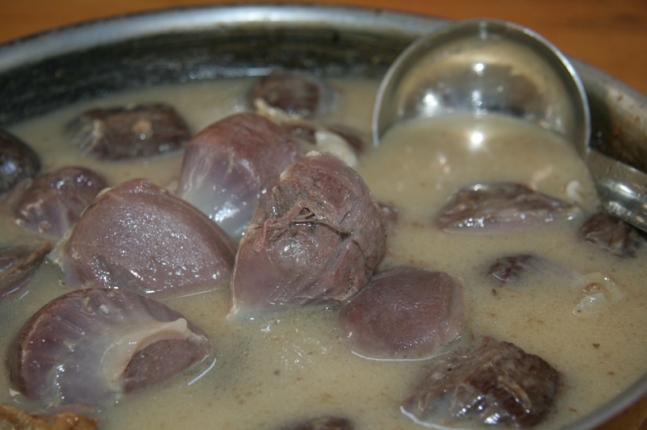

Polish Culinary [#08] - Kashubian Cuisine - What are goose pipkins?
![Polish Culinary [#08] - Kashubian Cuisine - What are goose pipkins?](/images/Polska_Kulinarna/Polska_Kulinarna_8/Gesie_Pipki.jpeg)
This is another dish from Kashubia with a funny name, following the 'ruchanki'. Goose pipki are nothing more than goose stomachs. The dish also appears in a second option, as stuffed goose necks. It originates from Jewish cuisine but now rules in Kashubian restaurants.
Is goose pipki really Kashubian cuisine?
Some may argue, as this dish is also found in the former Galicia region. One thing is certain – we know about goose dishes thanks to the Jews. Goose was considered very valuable meat for them, from which they made broth, lard, stuffed it whole, and ate offal. Goose pipki, or more precisely gęsie pipkes, stir debates in Jewish cuisine because for some it will be a dish made from stomachs, while for others, it will refer to necks. In Poland, the first option is more popular, likely due to availability.
After cleaning, the stomachs are boiled in broth. They can also be stewed with onions, and the traditional version involves stomachs cooked in oil or goose lard with onions and garlic. The dish resembles a stew and is often served with pickled cucumber. Neck, on the other hand, is filled with a filling of grated potatoes with added onions, sometimes with meat. Both dishes are worth trying, whether in Kashubia or in southern Poland.
What is, however, the foundation of Kashubian cuisine? Of course, fish. And where do they come from? Of course, from lakes. Kashubia is indeed the land of lakes, forests, and moraine hills. In between visiting restaurants, you can head to one of the more than a thousand lakes, such as Lake Wdzydze, Raduńskie, or Charzykowskie.
Author of the text - Joanna Choma