

Carmelite Museum in Czerna
The history of the Discalced Carmelites in Poland dates back to the early 17th century. Near the small town of Krzeszowice, located just outside of Kraków, Agnieszka z Tęczyńskich Firlejowa purchased the villages of Żbik, Siedlec, and Paczółtowice. In Czerna, she founded the now historic Discalced Carmelite monastery, which constitutes one of the important landmarks on the map of Poland's religious monuments. Every year, pilgrims come here to pray in silence and contemplation, to walk the Stations of the Cross, or to learn about the history of the order.
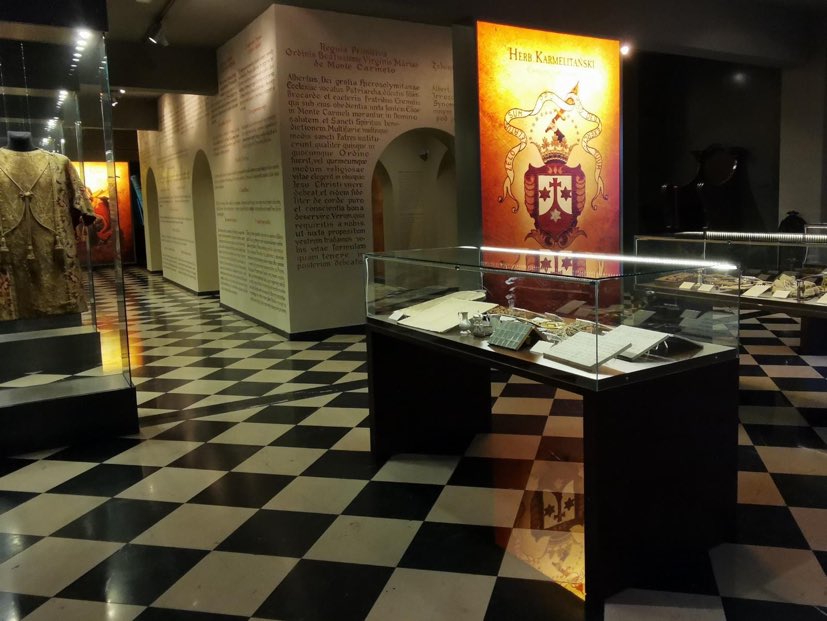
The museum located in the Pilgrim's House is relatively small. Since 2014, it has been arranged in a modern way, turning it into a multimedia museum. We can learn about the stories of the Carmelite fathers through both images and sounds. There is much to talk about – invasions by Swedish, Moscow, or Saxon troops, crises during the partitions, or the martyrdom of the victims of World War II. The exhibitions also include aspects of the monks' lives, so we find everyday objects and memorabilia there.
Starting the museum visit, we enter the world of a library. A pleasant dimness prevails there, with monastery music playing in the background. We can find hand-copied prayer books and items that were donated to the monastery by its benefactor. On touch screens that blend into the library space, we can read documents related to the founding of the monastery and the privileges granted to it. Particular attention should be paid to a significant collection of everyday items, such as: lamps, writing instruments, and shoes. Interestingly, there are lists of gestures that replaced words – after all, the hermits were obliged to silence. It is also worth looking at the memorabilia associated with St. Raphael Kalinowski, who was the prior of the monastery, a participant in the uprising, and was exiled to Siberia. The last point of the visit is a room where a film presenting the daily life of the monks is screened.
Visiting the museum gives us the impression that we are fully stepping into a certain history. This is all thanks to the incredible atmosphere created by the combination of light, shadows, music, and shapes. The exhibition allows us to deepen our knowledge of Carmelite spirituality and to pause for a moment in today’s fast-paced world.
Author of the photos and text: Ewa Bandyk