

Jarocin
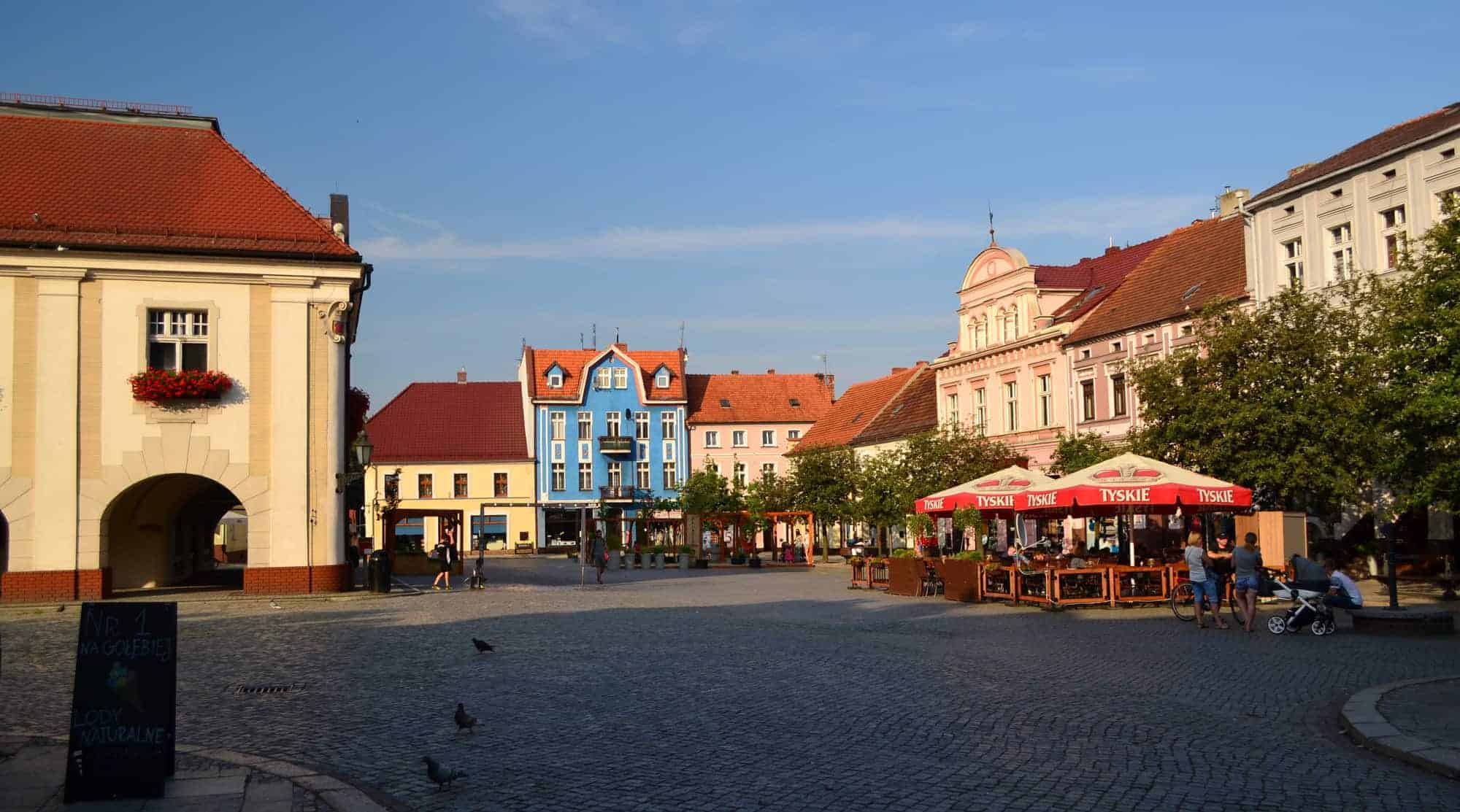
Jarocin is a historic, currently very well-kept town in the Greater Poland Voivodeship, (70 km southeast of Poznań) known and associated with rock music festivals in the 1980s. The Rock Musicians Festival established itself in its most popular form in 1980, however, music festivals had been held here since 1970, and for quite a while were the largest youth music festival, mainly rock music, in the Eastern Bloc countries. Among the most famous bands that debuted in Jarocin are T.Love, Hey with Katarzyna Nosowska at the forefront, Dżem with the legendary Rysiek Riedel, and a whole host of punk rock bands.
In 1994, the festival was marked by significant riots and clashes with the police. Although it was mostly believed that this was the reason the festival would be held for the last time, the actual cause lay in the festival's profitability, the lack of potential sponsors for the event, and growing competition from other similar events. In 1995, for the first time in 25 years, the festival did not take place.
Currently, there is a noticeable huge revival of the musical legend of Jarocin. Interesting murals have appeared on the walls, at the intersection of the main roads we can encounter the symbolic "Glany Monument," and in an old granary, a museum called “The Granary of Polish Rock” has been arranged with a permanent exhibition dedicated to the history of Polish rock music and Jarocin festivals. There was also a revival of the event; in July 2018, a three-day festival was held again in the urban space of Jarocin, where dozens of artists performed on four stages located in central points of the town, and the Young Rhythms – a legendary competition for debutants, which Katarzyna Nosowska, the winner of the Rhythms in 1992, sat on the jury, was also included.
The town has interesting monuments and quite a decent tourist base. The oldest object is the Parish Church of St. Martin from 1610, right by the market square. (The tower with a helmet from the 19th century, interior furnishings from the 17th century, baroque, rococo, classicist, a sundial on the wall, and in front of the church, two boulders with hollowed niches for holy water).
Palace and park complex:
- Radolińscy Palace, neo-Gothic (1836–1850), which currently houses an excellent accommodation base, a cheap youth hostel, its main advantage is the location in the heart of the park, as well as the atmosphere of the former palace,
- The treasury in the palace park, a remnant of a medieval castle, rebuilt before 1894 (currently the Regional Museum),
- ruins of the Gothic church of St. Spirit from 1516,
- landscape park, established in the mid-19th century on the grounds of the castle garden.
Author of the photos and text: Katarzyna Krajewska
Author's website - www.fotofiszka.eu